How does AI translate idioms and slang? Modern AI translation systems use surrounding context and learned language patterns to estimate the intended meaning of non-literal phrases, then generate a target-language expression that conveys that meaning. They can perform well on common idioms, but errors remain more likely with rare expressions, fast-changing slang, regional usage, sarcasm, wordplay and culturally specific references. Human review is most valuable when meaning, tone or reputational risk matters.
AI translation is very good at converting ordinary, literal language between many widely used language pairs. Idioms, slang and figurative language are harder because the intended meaning often cannot be recovered by translating each word independently. A modern system therefore has to infer context, speaker intent, cultural convention and tone before choosing an equivalent expression in the target language.
For production multilingual workflows, see our AI Translation service for the delivery path behind the guidance in this article.
That distinction is important. The job is not merely to replace one phrase with another. It is to decide whether a phrase should be translated literally, paraphrased, localized with a comparable idiom, retained, explained or rewritten.
Why non-literal language is difficult to translate
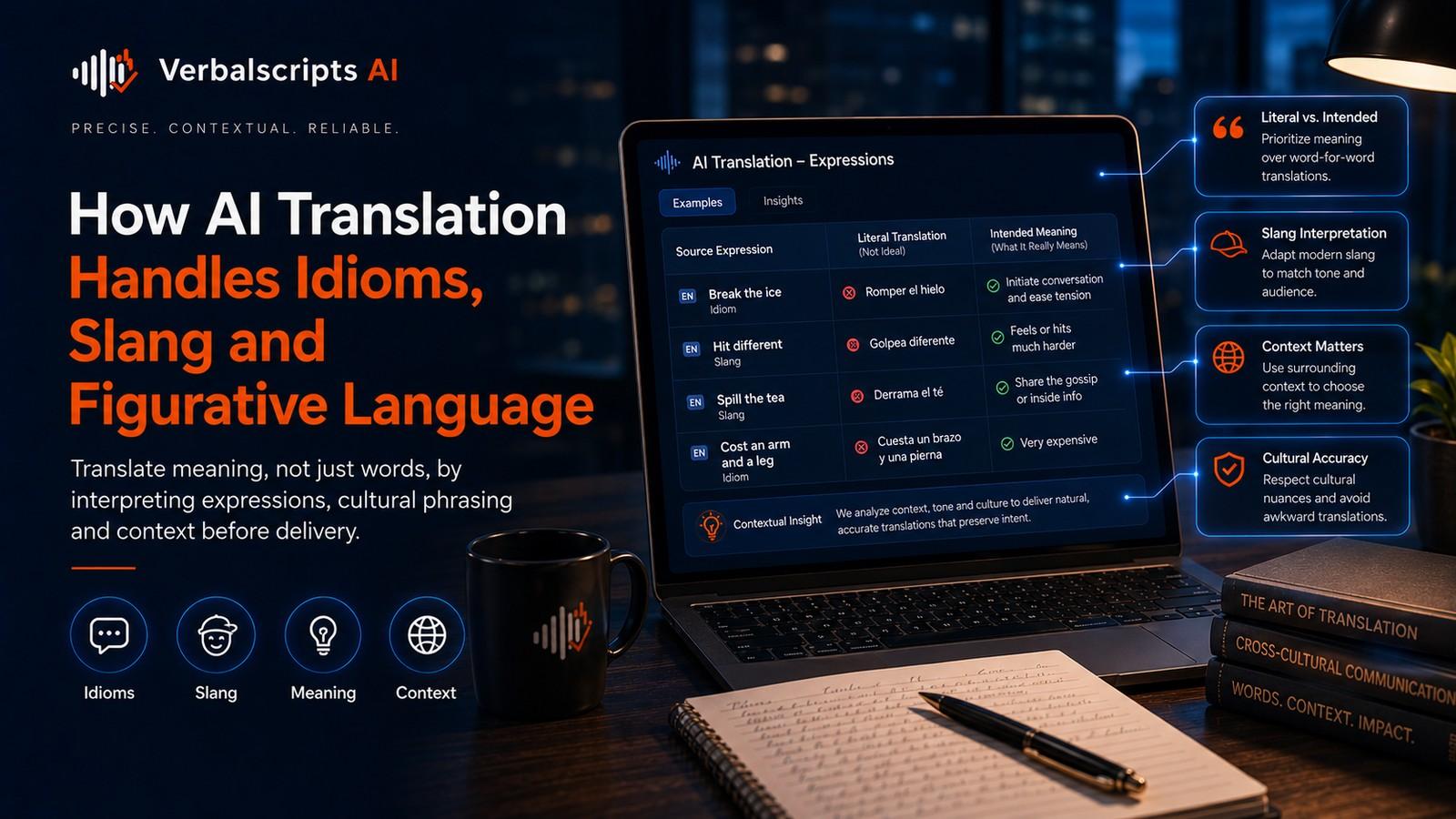
Literal language is relatively compositional: the meaning of a sentence can usually be derived from the meanings of its parts. Idioms are different. “Break the ice” does not normally describe breaking frozen water. “Spill the beans” is not about food. A system that focuses too narrowly on individual words can produce a grammatically correct sentence that is semantically wrong.
Slang creates another problem. It changes quickly and often depends on age, region, online community, profession or social group. A phrase can be complimentary in one community and insulting in another. The same word can also shift meaning over time.
Figurative language is broader still. It includes metaphors, similes, irony, understatement, hyperbole, euphemism and personification. These devices carry not only information but also style, emotional force and cultural associations.
Research continues to show that idioms remain a challenging area for machine translation. A 2025 ACL study comparing text and speech translation systems found that idiom translation was more difficult than conventional news translation, reinforcing the need for targeted evaluation rather than relying only on general translation scores.
What a modern AI translation system actually does
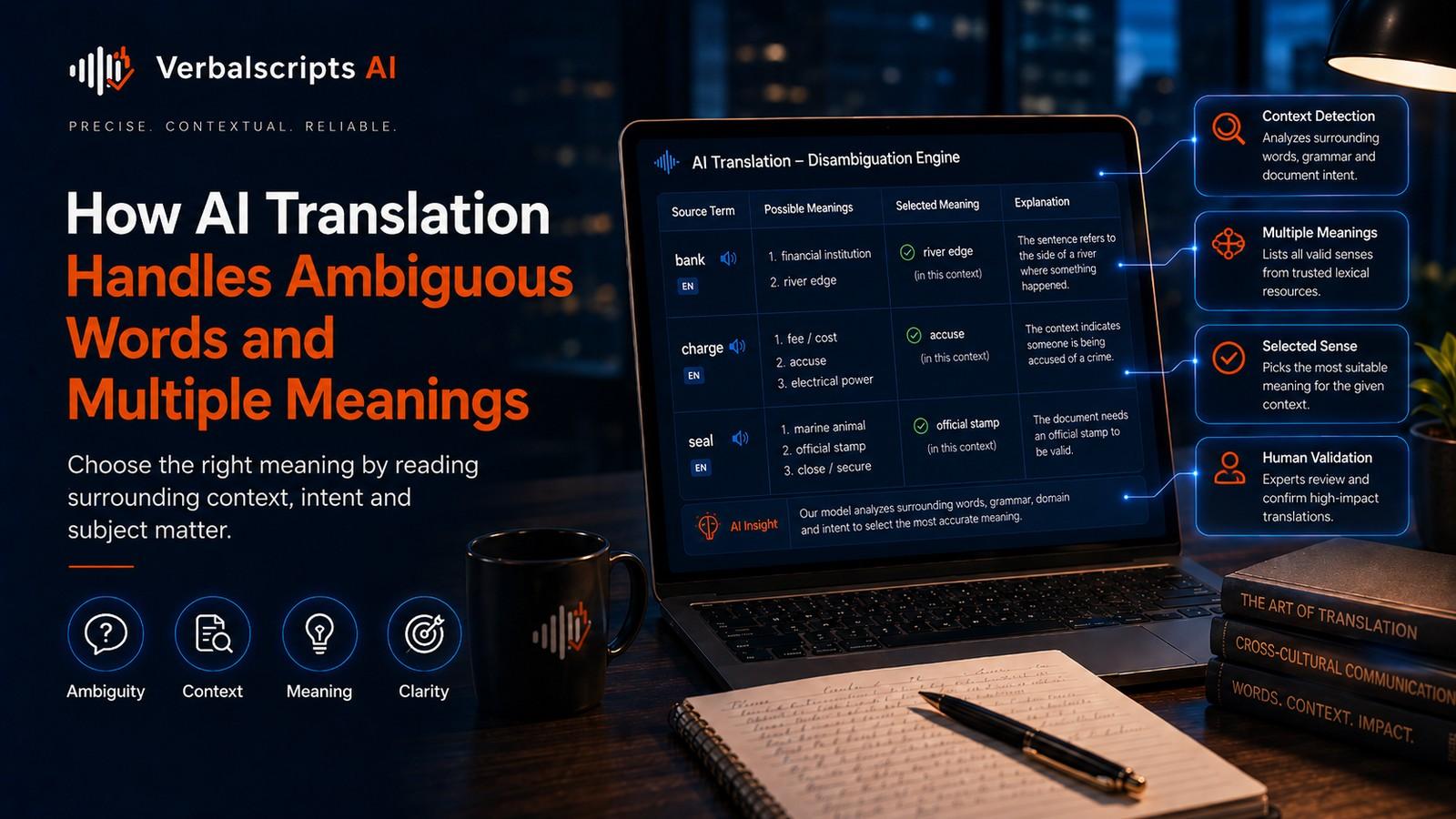
Modern translation systems do not normally process a sentence as a simple word-for-word dictionary lookup. Neural machine translation and large language model based systems represent words in relation to the surrounding sequence. That makes it possible to distinguish, for example, between “cold” as a temperature, “a cold” as an illness and “cold” as an emotional description.
For non-literal language, a useful workflow can be described in five stages:
- Detect a potentially non-literal expression. The system identifies a phrase whose combined meaning may differ from the literal meaning of its words.
- Infer the likely sense from context. Nearby sentences, topic, speakers and document context provide clues.
- Choose a translation strategy. The model may use an equivalent idiom, a natural paraphrase or a more literal rendering.
- Match tone and register. The output should sound formal, casual, humorous, technical or conversational when the source does.
- Check consistency and risk. High-stakes content may require a reviewer to confirm that nuance has not been lost.
The larger the relevant context, the more evidence the model has. A single sentence containing “that was sick” is ambiguous. In a medical report it probably has a literal meaning. In a casual conversation about a concert, it may mean “excellent.” The surrounding text changes the answer.
How AI handles idioms
Common idioms are often translated well because models have encountered many examples of them and their equivalents. The best translation, however, is not always another idiom.
Consider the English sentence:
“We need to get the ball rolling before Friday.”
A literal translation of “get the ball rolling” could sound strange in another language. Depending on the target language and audience, a better output may be equivalent to “we need to start the process before Friday.”
There are four common strategies.
1. Use a target-language idiom with the same meaning
This works when the target language has a familiar expression that carries similar meaning and tone. It often produces the most natural result.
2. Paraphrase the meaning
If no equivalent idiom exists, a clear paraphrase is usually safer than forcing a literal image into the translation.
3. Preserve the source expression
This can be appropriate for titles, slogans, quotations, literary analysis or culturally important phrases, especially when the expression itself is part of what the text discusses.
4. Translate and explain
Educational, legal, historical or research material may need both the translated wording and a short explanation. The goal is traceability rather than stylistic elegance.
The right choice depends on purpose. Marketing copy may favor natural adaptation. A witness interview may need to preserve what the speaker actually said. A literary translation may intentionally retain imagery that a business translation would simplify.
How AI handles slang
Slang is difficult because it is unstable. Dictionaries and training corpora always lag behind live language to some degree. Social media can produce new meanings in weeks, and identical expressions can differ across countries that nominally speak the same language.
A robust system uses several signals:
- nearby vocabulary;
- speaker age or role when known;
- region or locale;
- subject matter;
- punctuation and emoji;
- conversational history;
- whether the phrase is quoted, ironic or literal.
For example, “that app is fire” should not normally become a sentence about combustion. Yet a system should not permanently map “fire” to “excellent,” because the literal sense remains common.
The safest translation workflow preserves uncertainty when context is insufficient. If two meanings are genuinely plausible, the model or reviewer should flag the segment rather than invent confidence.
Figurative language, metaphors and imagery
Metaphors are not all equally difficult. Conventional metaphors such as “economic recovery gained momentum” appear frequently in professional writing and are often handled well. Creative metaphors are harder because the writer may be deliberately combining concepts in an unusual way.
Three questions help determine the translation strategy:
Is the image important? In advertising, literature and speeches, imagery may be central to the message. In an operating procedure, clarity usually matters more.
Does the metaphor make sense in the target culture? Some images transfer well; others create unintended associations.
Does the target language have a conventional equivalent? If yes, using it can preserve both meaning and naturalness.
AI can suggest alternatives, but human judgment is valuable when the phrase is central to brand identity or emotional impact.
Sarcasm, irony and humor
Sarcasm is one of the most context-dependent forms of language. The literal words can communicate the opposite of the intended meaning. “Great job” may be praise or criticism. Text alone may not contain enough evidence to decide.
Audio adds prosody, pauses and emphasis, which can help a human understand the intent, but an audio-to-translation pipeline introduces additional opportunities for error. First the speech must be recognized correctly; then the intended meaning must be translated.
Humor introduces another tradeoff: fidelity versus effect. A joke built on rhyme or a double meaning may not survive direct translation. A skilled reviewer may need to rewrite the joke so that it produces a comparable effect for the target audience.
Wordplay, puns and double meanings
Puns are difficult because they intentionally exploit ambiguity. A direct translation may preserve the dictionary meaning while destroying the joke.
For customer-facing content, useful options include:
- create a different pun in the target language;
- translate the intended message without the pun;
- retain the original phrase with an explanation;
- provide multiple variants for reviewer selection.
This is one reason “accurate translation” should not be defined only as lexical similarity. A translation can be lexically close and communicatively poor.
Tone matters as much as meaning
Two translations can communicate the same factual information while sounding very different. Consider a slang-heavy product campaign. Replacing every casual expression with formal standard language may remove errors but also erase the brand voice.
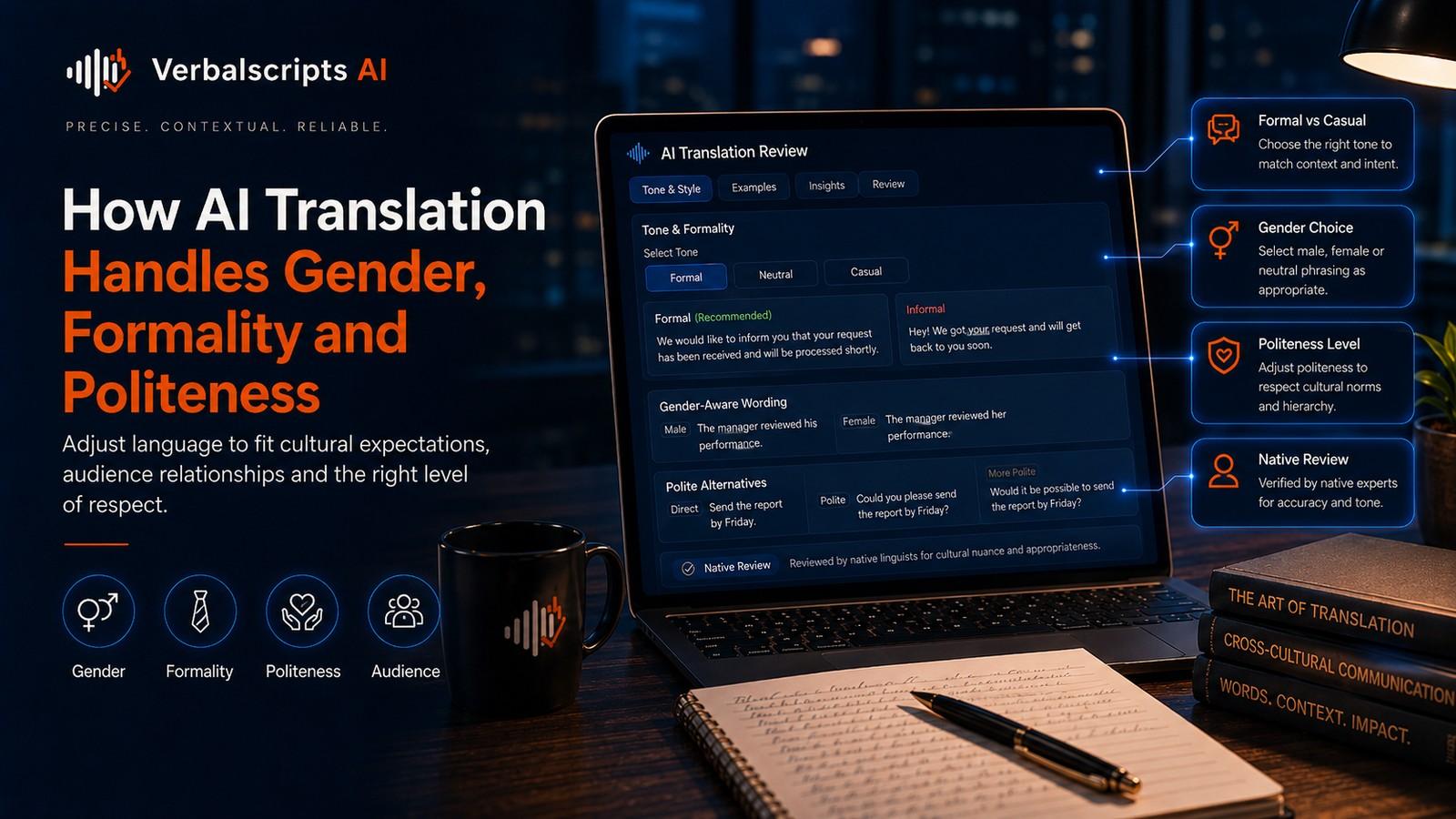
A good workflow separates at least four dimensions:
| Dimension | Question to verify |
|---|---|
| Meaning | Is the intended message preserved? |
| Register | Is the level of formality appropriate? |
| Tone | Does the translation feel serious, playful, urgent or empathetic as intended? |
| Cultural fit | Will the expression make sense and feel natural to the target audience? |
For multilingual brands, those dimensions should be written into a style guide rather than decided from scratch in every project.
Why document-level context improves results
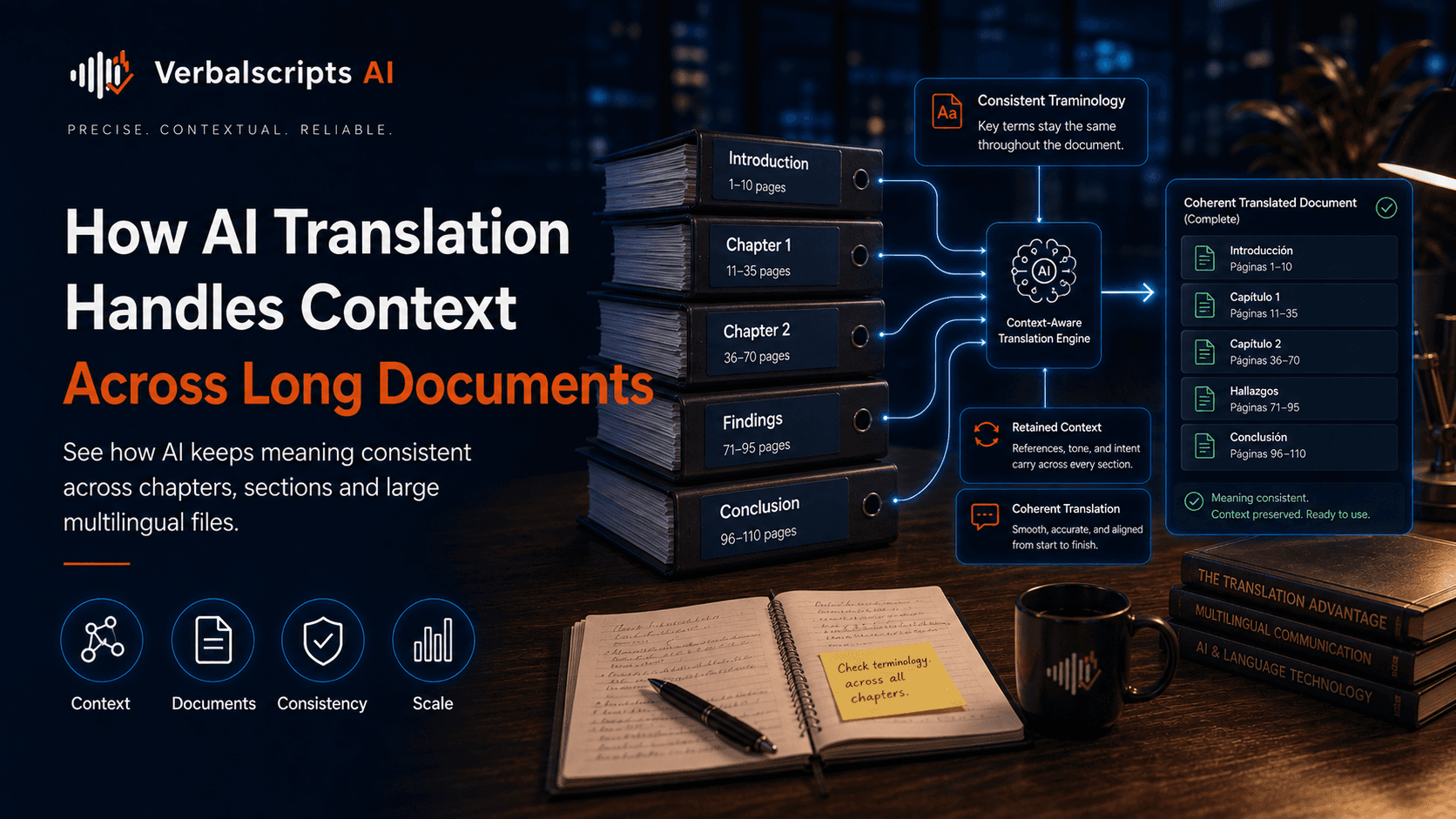
A sentence can be ambiguous in isolation but obvious inside a document. Product names, character relationships, recurring jokes and terminology all become easier to interpret when earlier and later text is available.
Document-level processing is especially useful for:
- interviews;
- podcasts;
- subtitles;
- marketing campaigns;
- long-form articles;
- customer support conversations;
- training material;
- literary or creative content.
Segmenting content too aggressively can remove the clues needed to translate figurative expressions correctly.
When human review is worth it
Human review is particularly useful when any of the following applies:
- the content is public-facing;
- the text represents a brand;
- the material contains humor, slogans or creative writing;
- the audience is culturally specific;
- a mistake could create legal, medical, financial or reputational risk;
- the source contains heavy slang, dialect or code-switching;
- the model produces multiple plausible interpretations.
A native or near-native reviewer can judge whether the output merely “makes sense” or actually sounds like something a person in that market would say.
A practical AI-plus-human workflow
A reliable workflow for idioms and figurative content can follow seven steps.
Step 1: Prepare clean source content
Correct obvious transcription errors, broken sentence boundaries and missing context. Poor source text makes non-literal interpretation harder.
Step 2: Specify language and locale
“Spanish” alone may be too broad for slang-heavy material. Specify the intended market when regional language matters.
Step 3: Supply terminology and style guidance
Provide approved product names, terms that must remain unchanged, preferred translations, prohibited wording and tone requirements.
Step 4: Translate with enough context
Process complete paragraphs, turns or document sections rather than isolated fragments when possible.
Step 5: Flag non-literal expressions
Create a review pass specifically for idioms, slang, metaphors, humor and culturally specific language.
Step 6: Review for meaning and naturalness
The reviewer should compare source and target, not simply proofread the target language.
Step 7: Feed approved decisions back into the workflow
Recurring expressions, brand phrases and market-specific preferences should be added to glossaries and style guides.
How to evaluate quality
General translation metrics can hide local failures. A long document may score well overall while mistranslating the one idiom that changes the meaning of a key paragraph.
For this reason, evaluate non-literal language separately. A practical scorecard can include:
- intended meaning preserved;
- no unjustified literal translation;
- tone preserved;
- culturally appropriate wording;
- no unexplained omission;
- no invented meaning;
- terminology consistent;
- reviewer confidence.
The test set should contain the kinds of language your organization actually uses.
Common failure patterns to watch for
Literalization: the words are translated correctly but the idiomatic meaning is lost.
Over-interpretation: the model assumes an idiom even though the source is literal.
Register flattening: casual speech becomes overly formal or vice versa.
Cultural substitution without justification: the translation introduces a local reference that changes the source meaning.
Hallucinated explanation: the model adds a meaning that is not supported by the source.
Inconsistent slang: the same expression is translated differently without contextual reason.
Best practices for teams
For enterprise or publishing workflows, do not treat non-literal language as an edge case. Build it into quality assurance.
Maintain an exception list for slogans, product phrases and recurring expressions. Give translators access to surrounding context. Evaluate by locale, not just language. Use native-speaker review for high-impact markets. Keep a record of approved adaptations so future content stays consistent.
The combination of AI speed and human linguistic judgment is especially effective here. AI can produce strong first drafts and surface alternatives; reviewers can resolve the last-mile questions that depend on culture, humor, identity and intent.
Frequently asked questions
Can AI translate idioms accurately?
Often, especially for common idioms in well-resourced language pairs. Accuracy is less predictable for rare idioms, regional expressions, new slang and phrases whose meaning depends heavily on context.
Should idioms be translated literally?
Usually not when the phrase is being used idiomatically. The better goal is to preserve the intended meaning and, when appropriate, a comparable tone or image.
Can AI understand slang?
AI can recognize a large amount of slang, but slang changes quickly and varies by community and region. Locale information and human review improve reliability.
What is the hardest figurative language for AI translation?
Creative wordplay, sarcasm, puns, culturally specific jokes and deliberately ambiguous language are among the hardest because there may be no direct equivalent.
Is human review always required?
No. Low-risk internal content may be acceptable as raw AI translation. Human review becomes more valuable when the content is customer-facing, high-stakes, culturally sensitive or stylistically important.
Conclusion
AI translation has moved far beyond word-for-word substitution, but idioms, slang and figurative language still expose the limits of purely automatic processing. The best results come from giving the model adequate context, defining locale and style requirements, and adding human review where nuance carries real value.
For Verbalscripts AI, the practical goal is not to make every sentence maximally literal. It is to create multilingual content that preserves meaning, context and intent while remaining natural for the people who will actually read it.
Research references
- Zaitova et al. (ACL 2025), *It’s Not a Walk in the Park! Challenges of Idiom Translation in Speech-to-text Systems*:
- Niu, Martindale & Carpuat (EMNLP 2017), *A Study of Style in Machine Translation: Controlling the Formality of Machine Translation Output*:
- Google Search Central, *Creating Helpful, Reliable, People-First Content*: