How does AI translation handle ambiguous words? Modern AI systems examine surrounding words, sentences and broader document context to infer which sense of an ambiguous word is most likely. They then select a target-language translation that expresses that sense. Performance is strong for common meanings with clear context, but rare senses, short fragments, domain-specific uses and deliberately ambiguous writing remain difficult. When the source itself is genuinely ambiguous, the safest translation may preserve the ambiguity rather than force one interpretation.
A large share of translation difficulty comes from a simple fact: words do not have one fixed meaning.
For production multilingual workflows, see our AI Translation service for the delivery path behind the guidance in this article.
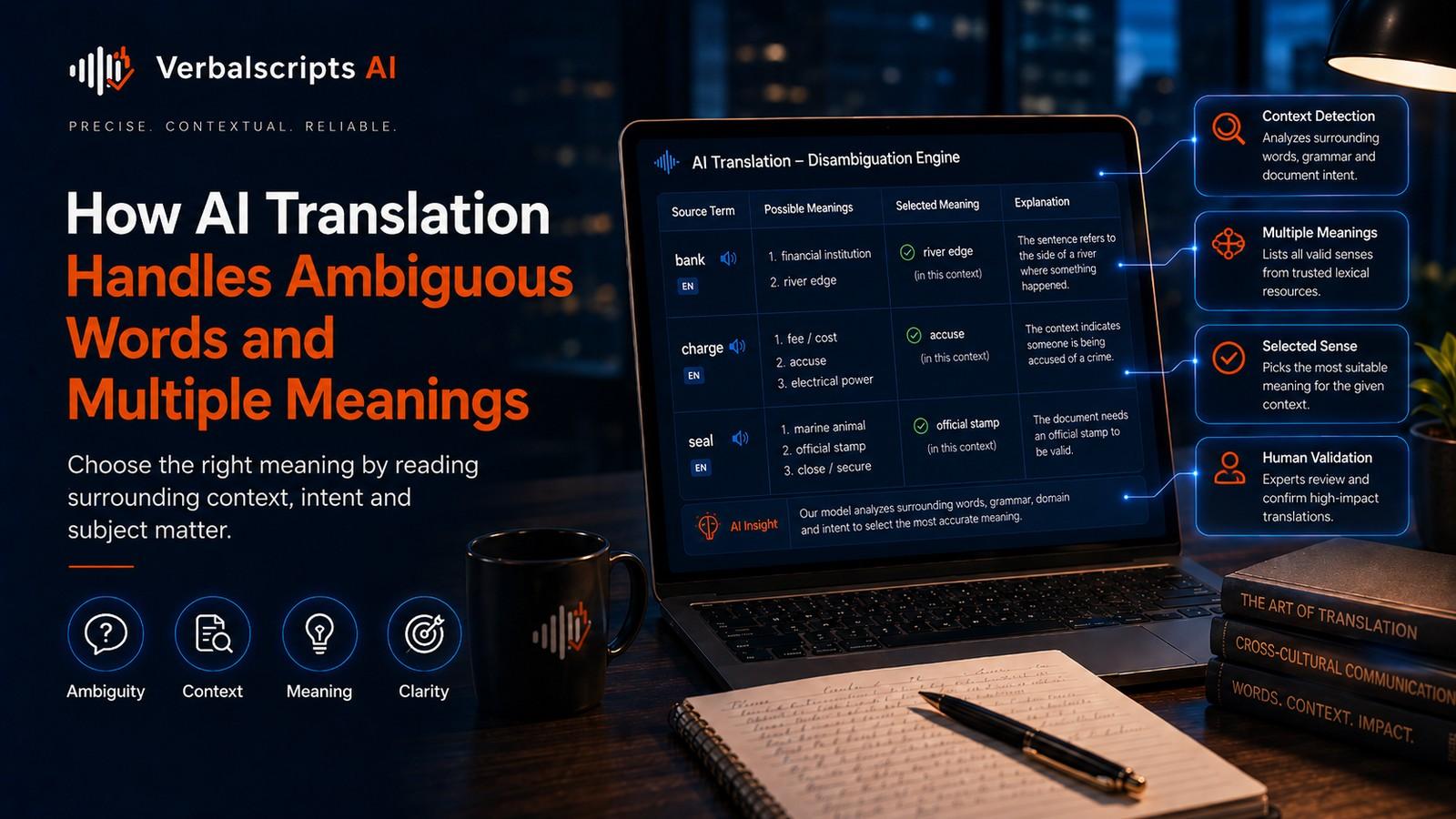
“Bank” may refer to a financial institution or the side of a river. “Charge” can mean a price, an accusation, an electrical property, a command to attack or the act of replenishing a battery. “Draft” can be a preliminary document, a flow of air, military conscription or a selection process.
Humans resolve these meanings using context almost automatically. AI translation systems must do the same.
This process is closely related to word-sense disambiguation: deciding which meaning of a word is active in a particular context.
What is lexical ambiguity?
Lexical ambiguity occurs when a word or phrase can represent more than one meaning.
There are several forms.
Polysemy
One word has related meanings. “Head” can refer to a body part, the leader of a department or the top of an object.
Homonymy
The same written or spoken form represents unrelated meanings. “Bat” can be an animal or a piece of sports equipment.
Grammatical ambiguity
A word can play different grammatical roles. “Record” can be a noun or a verb.
Domain ambiguity
A term has different specialized meanings in different fields. “Cell” has distinct meanings in biology, telecommunications, spreadsheets and prisons.
Referential ambiguity
A pronoun or noun phrase may have multiple possible referents: “Alex told Jordan that they should leave.”
Translation can force choices the source language did not make.
Why translation exposes ambiguity
Languages divide meaning differently. A source language may use one broad word where the target language requires several specific words.
English “know,” for example, maps differently in languages that distinguish knowing a fact from being acquainted with a person. A source sentence that is slightly vague may therefore require a semantic choice in translation.
The reverse also happens. A target language may allow one term to cover multiple distinctions expressed separately in the source.
That means translation is not just replacing vocabulary. It is mapping meaning systems.
How modern AI uses context
Older word-based translation methods relied heavily on local phrase statistics. Neural systems and large language models represent a token in relation to the surrounding sequence, which improves contextual interpretation.
Consider:
- “She deposited cash at the bank.”
- “They picnicked on the bank of the river.”
The noun is identical, but the surrounding words strongly indicate different meanings.
Context can come from several levels:
- Local phrase context: nearby words.
- Sentence context: syntax and semantic relationships.
- Paragraph context: topic and preceding references.
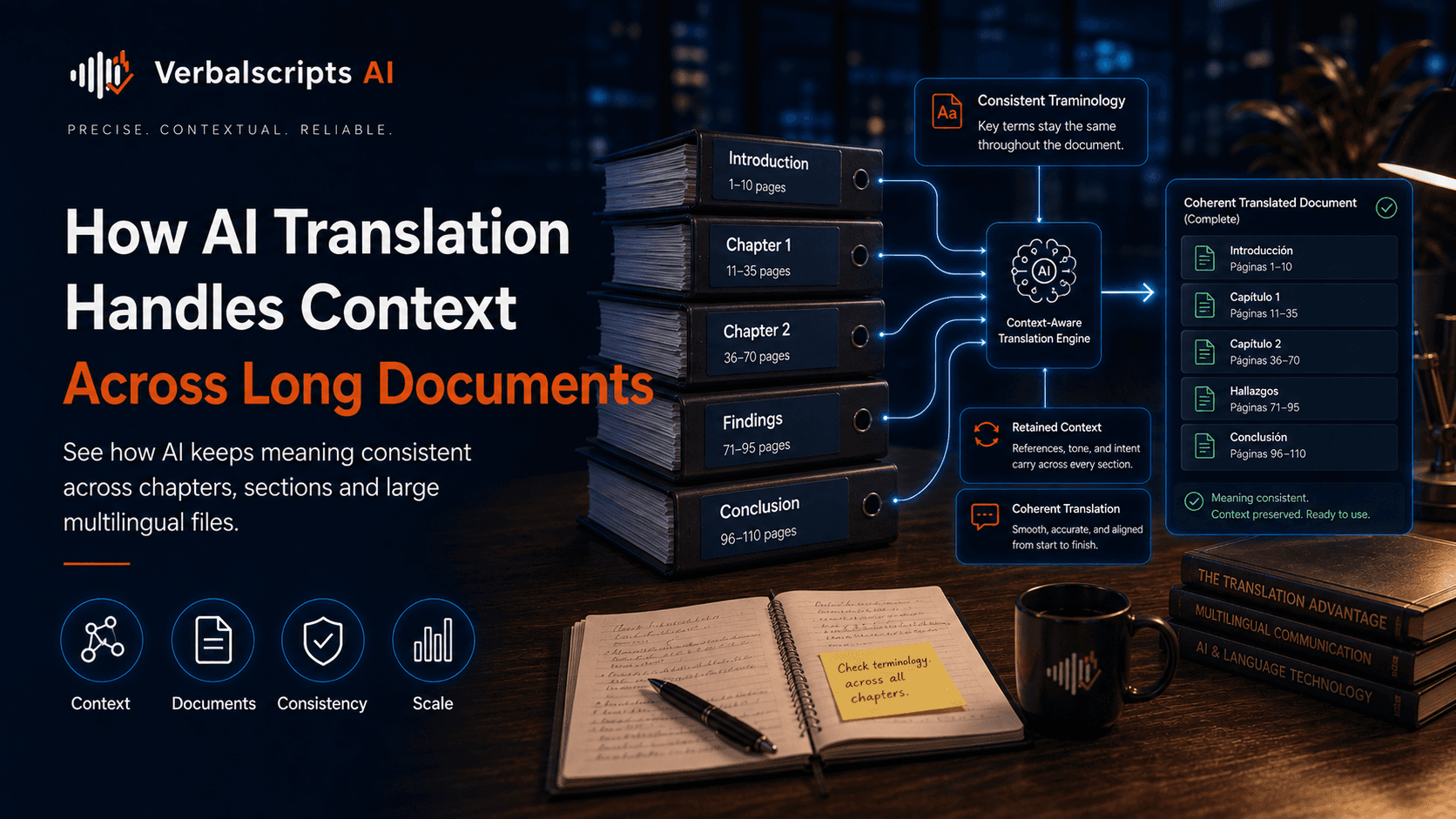
- Document context: definitions, characters and recurring terminology.
- Project context: domain, audience, locale and glossary.
The more relevant context the system receives, the less it has to guess.
What research shows
Lexical ambiguity remains an active machine translation research problem.
The DiBiMT benchmark was created specifically to study word-sense ambiguity in translation. Its researchers found that machine translation systems can still struggle with ambiguous words, particularly less frequent meanings. A 2025 expanded gold evaluation benchmark likewise emphasized that uncommon senses remain a challenge even as general translation quality improves.
This is important for buyers and QA teams: a model can perform very well on average while still making systematic errors on uncommon meanings.
Frequency bias
AI systems learn from patterns in data. If one sense of a word occurs much more frequently than another, the model may prefer the common sense even when the rare sense is correct.
Imagine a technical document using “mouse” to refer to laboratory animals in a context where the model has seen enormous amounts of computer-related text. Strong local context will usually solve the problem, but rare domains can still expose frequency bias.
This is one reason domain terminology and reference material help.
Domain context as a disambiguation tool
A project labeled “electrical engineering” narrows the likely meaning of “current.” A document labeled “criminal procedure” changes the expected interpretation of “charge.” A spreadsheet tutorial changes the likely sense of “cell.”
Domain metadata can therefore be treated as translation context.
A production workflow should identify:
- industry;
- document type;
- audience;
- jurisdiction;
- product;
- technical subdomain.
Do not make the model infer all of this from a short sentence if the information is already known.
Glossaries and definitions
A glossary can resolve ambiguity before it reaches the model.
A weak glossary says:
margin → margen
A stronger termbase says:
margin
- domain: finance;
- definition: amount of collateral required;
- approved Spanish term: [approved term];
- do not use: [forbidden alternative];
- example context: [approved example].
Definitions prevent a glossary from becoming a list of context-free substitutions.
For polysemous source terms, create multiple entries linked to different senses rather than one absolute rule.
Sentence segmentation can remove meaning
Translation pipelines often split documents into small segments for efficiency. That can damage disambiguation.
Consider:
“Please update the record. It was created after the hearing.”
If “record” appears in a legal transcript, the previous page may reveal whether it means the official case record, a database record or an audio recording.
Overly aggressive segmentation removes those clues.
For documents with recurring entities or specialized terminology, preserve paragraph or document context even if the system ultimately emits segment-level translations.
Pronoun ambiguity
Ambiguity is not limited to nouns.
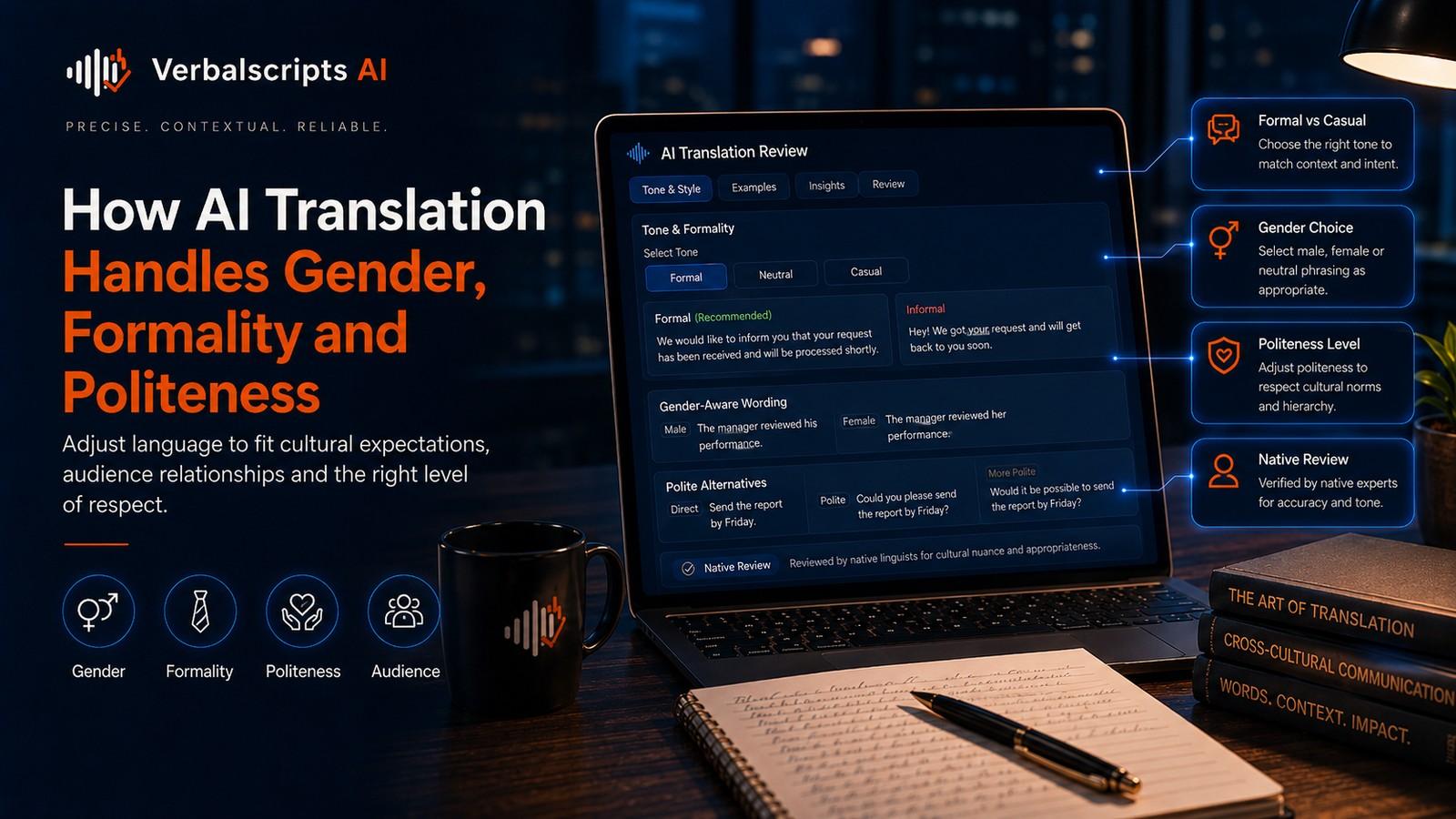
English pronouns can omit gender, formality or singular/plural distinctions that another language requires. “You” may need a formal or informal target pronoun. “They” may be singular or plural. A gender-neutral reference may require a gendered grammatical form in the target language.
Research on bias-causing ambiguity in machine translation has explicitly examined gender, number and formality because the target language can force the system to make a choice the source leaves open.
This is not merely a grammar issue. An unjustified choice can change identity or social meaning.
Structural ambiguity
Sometimes the whole sentence has multiple interpretations.
“Visiting relatives can be annoying.”
Does it mean the act of visiting relatives can be annoying, or relatives who are visiting can be annoying?
A translation into another language may need different structures for those two readings.
The model may use statistical likelihood to select one, but if the source is intentionally or genuinely ambiguous, selecting a single reading can be an error.
When ambiguity should be preserved
Translation quality is not always about resolving uncertainty.
Ambiguity may be intentional in:
- contracts;
- literature;
- advertising;
- jokes;
- diplomatic language;
- interview responses;
- poetry;
- legal evidence.
A translator should not silently “clarify” the source unless the project permits it.
For legal or evidentiary translation, preserving ambiguity can be critical because interpretation may belong to a court, attorney, investigator or reader, not the translator.
When clarification is better
In operational content, ambiguity is usually harmful.
If an instruction says “close the account” and the system cannot tell whether “account” means a user profile or a financial account, the workflow should seek clarification.
Useful mechanisms include:
- flagging low-confidence segments;
- presenting alternative translations;
- attaching a reviewer comment;
- querying the author;
- using a termbase definition;
- retrieving product documentation.
A managed workflow should allow uncertainty to surface.
Translating short strings and UI labels
Short strings are disproportionately hard because they contain little context.
A button labeled “Open” can be an adjective or a verb. “Order” can mean a purchase, sequence or command. “Home” can mean a residence or the main navigation destination.
Localization systems should attach metadata to strings:
- screenshot;
- UI location;
- description;
- character limit;
- part of speech;
- variables;
- related strings.
The translator then has context that is invisible in the word itself.
Audio and transcript ambiguity
Speech adds another layer.
A homophone may be transcribed incorrectly before translation begins. If speech recognition produces the wrong word, even a perfect translation model can translate the wrong source.
For audio translation, quality therefore depends on:
- speech recognition;
- punctuation and segmentation;
- speaker context;
- source-language interpretation;
- translation.
Reviewing the transcript can be necessary when the audio is noisy, heavily accented or domain-specific.
A practical disambiguation workflow
Step 1: Preserve context
Avoid feeding isolated words or fragments unless the task is specifically terminology lookup.
Step 2: Declare the domain
Supply subject, document type and target audience.
Step 3: Apply terminology
Use definitions, not just bilingual pairs.
Step 4: Translate
Let the model use local and document context.
Step 5: Detect risky ambiguity
Flag polysemous high-value terms, pronouns, short strings and low-confidence segments.
Step 6: Review
A human checks whether the selected sense matches the source and domain.
Step 7: Capture the decision
Recurring sense choices belong in the termbase or project memory.
How to test a translation system for ambiguity
Generic benchmark scores are not enough.
Build a test set containing:
- frequent and rare senses;
- domain-specific terms;
- short UI strings;
- ambiguous pronouns;
- multiple-sentence context;
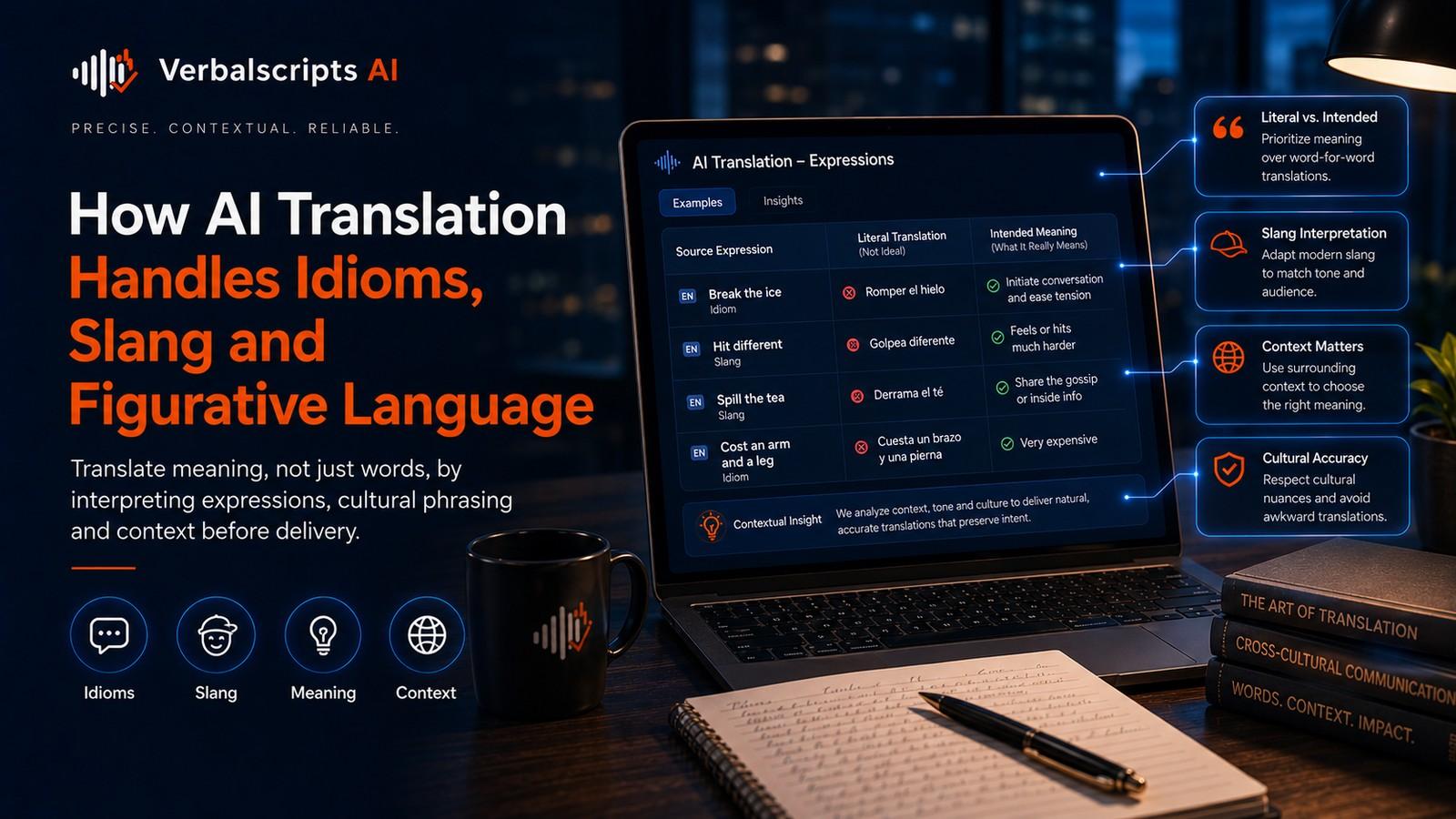
- idiomatic uses;
- deliberately ambiguous sentences.
Evaluate whether the system:
- chose the correct sense;
- preserved ambiguity when appropriate;
- avoided unsupported detail;
- followed glossary definitions;
- maintained consistency across a document.
This kind of targeted evaluation reveals errors hidden by aggregate metrics.
Common failure patterns
Most-common-sense default
The model chooses the frequent meaning despite domain clues.
Overconfident resolution
The source is ambiguous, but the target asserts one interpretation.
Context truncation
A long document is translated in pieces and loses a definition from earlier text.
Glossary collision
A glossary forces one translation even when the source term is being used in another sense.
Pronoun assumption
Gender, number or formality is invented.
Fluent semantic error
The result reads naturally enough that a non-expert reviewer misses the wrong meaning.
Frequently asked questions
What is word-sense disambiguation in translation?
It is the process of determining which meaning of an ambiguous word is intended in a particular context before choosing the target-language equivalent.
Why does AI mistranslate uncommon meanings?
Models learn from usage patterns. Frequent senses can dominate when context is weak or the rare sense has limited training data.
Does a longer context always improve translation?
Relevant context usually helps, but more text is not automatically better. The system must be able to use the context effectively, and irrelevant material can sometimes add noise.
Should a translator remove ambiguity?
Only when the intended meaning is sufficiently supported or the project calls for clarification. Intentional or material ambiguity may need to be preserved.
Can a glossary fix ambiguous terms?
Yes, if the glossary includes definitions and domain rules. A context-free one-to-one substitution can actually create errors when a source word has multiple senses.
Conclusion
Ambiguity is not a corner case. It is a basic property of human language.
Modern AI translation resolves many ambiguous words successfully because it can model context at sentence and document level. The remaining risk concentrates in rare senses, short fragments, specialized domains and situations where the target language forces choices the source did not make.
The strongest workflow combines context-aware AI with terminology, metadata, targeted QA and a mechanism for humans to preserve or resolve uncertainty deliberately.
Research references
- Martelli et al. (Computational Linguistics 2025), *DiBiMT: A Gold Evaluation Benchmark for Studying Lexical Ambiguity in Machine Translation*:
- Campolungo et al. (ACL 2022), *DiBiMT: A Novel Benchmark for Measuring Word Sense Disambiguation Biases in Machine Translation*:
- Vickrey et al. (HLT/EMNLP 2005), *Word-Sense Disambiguation for Machine Translation*:
- Měchura (GeBNLP 2022), *A Taxonomy of Bias-Causing Ambiguities in Machine Translation*: