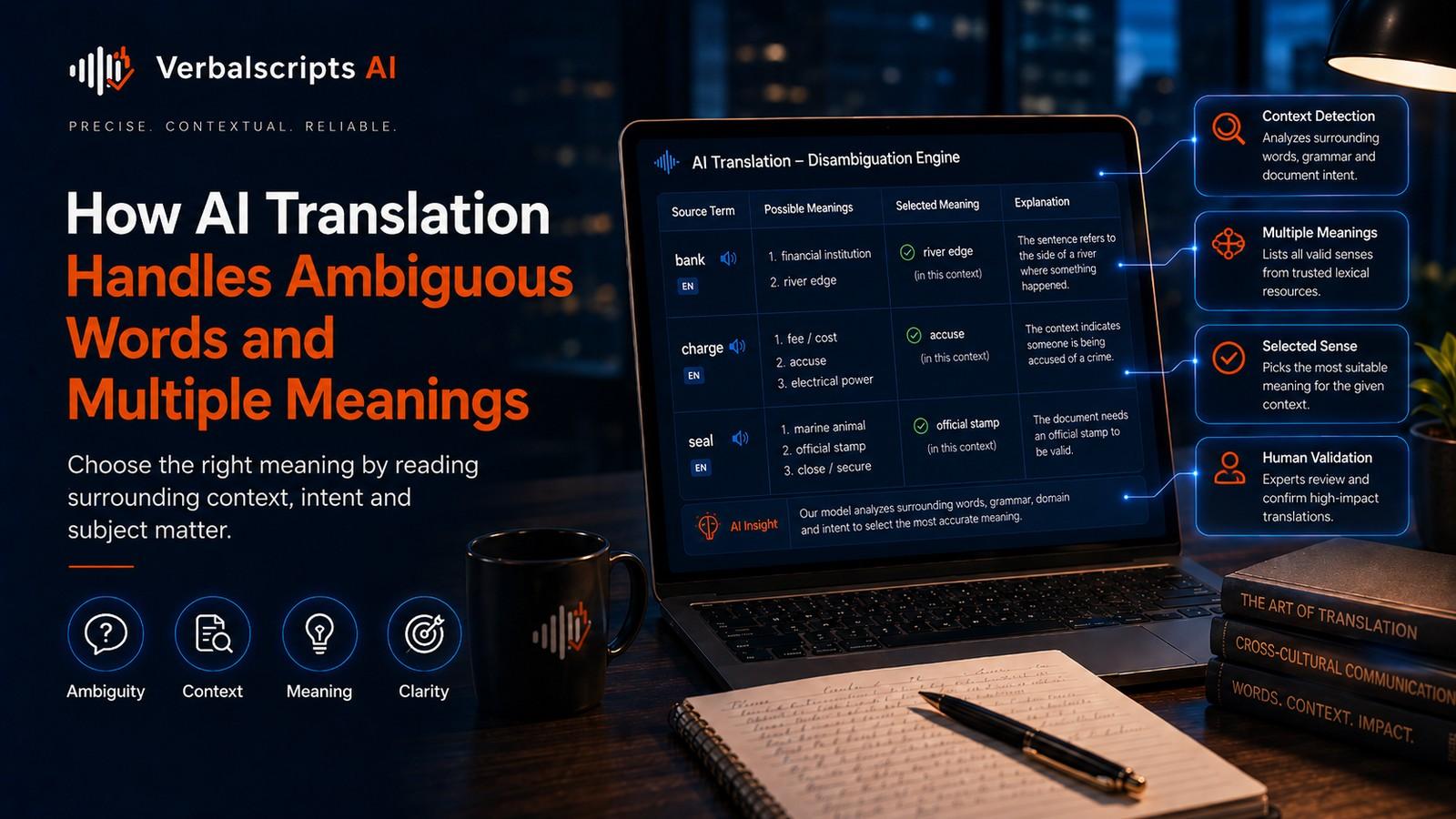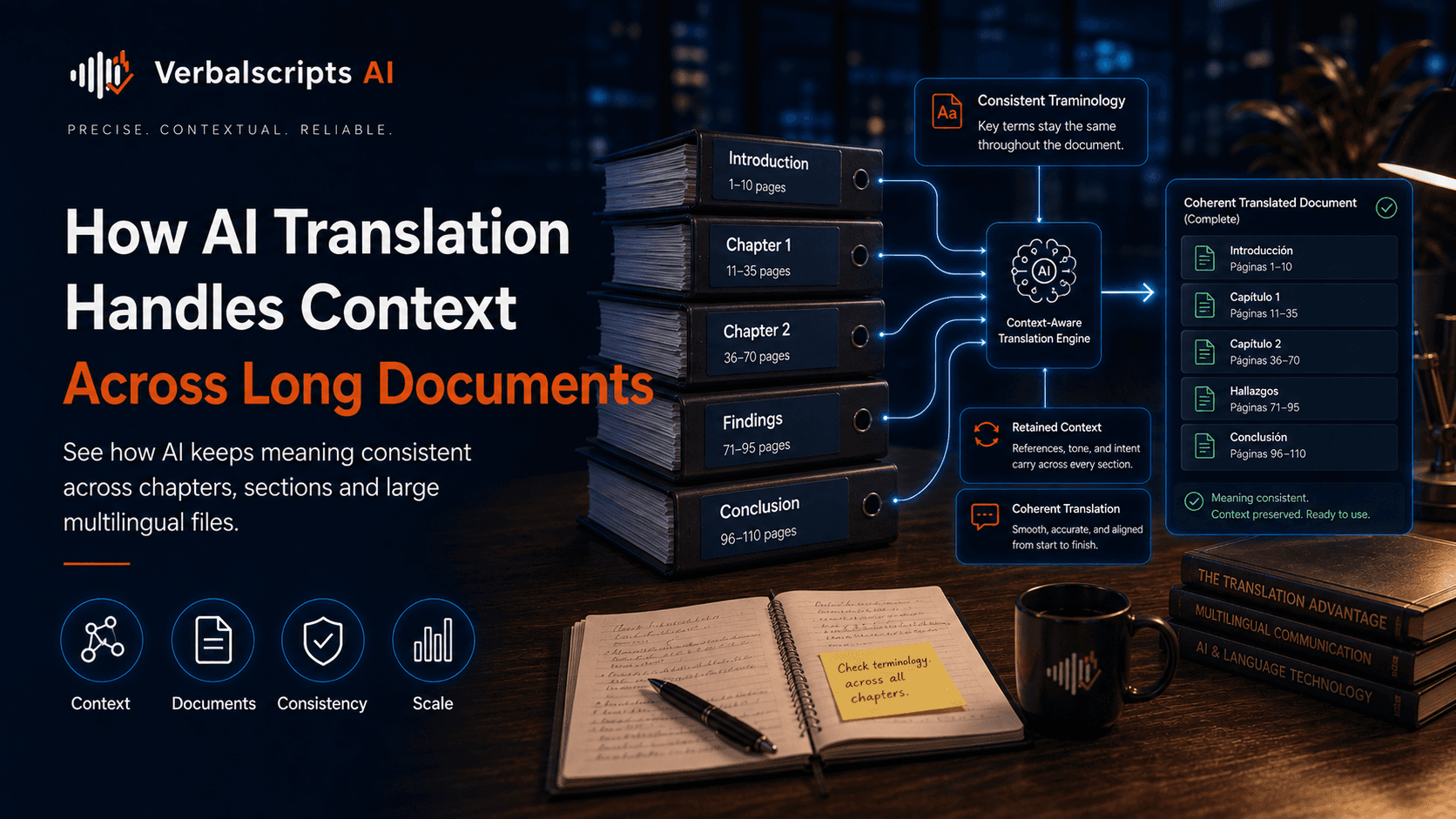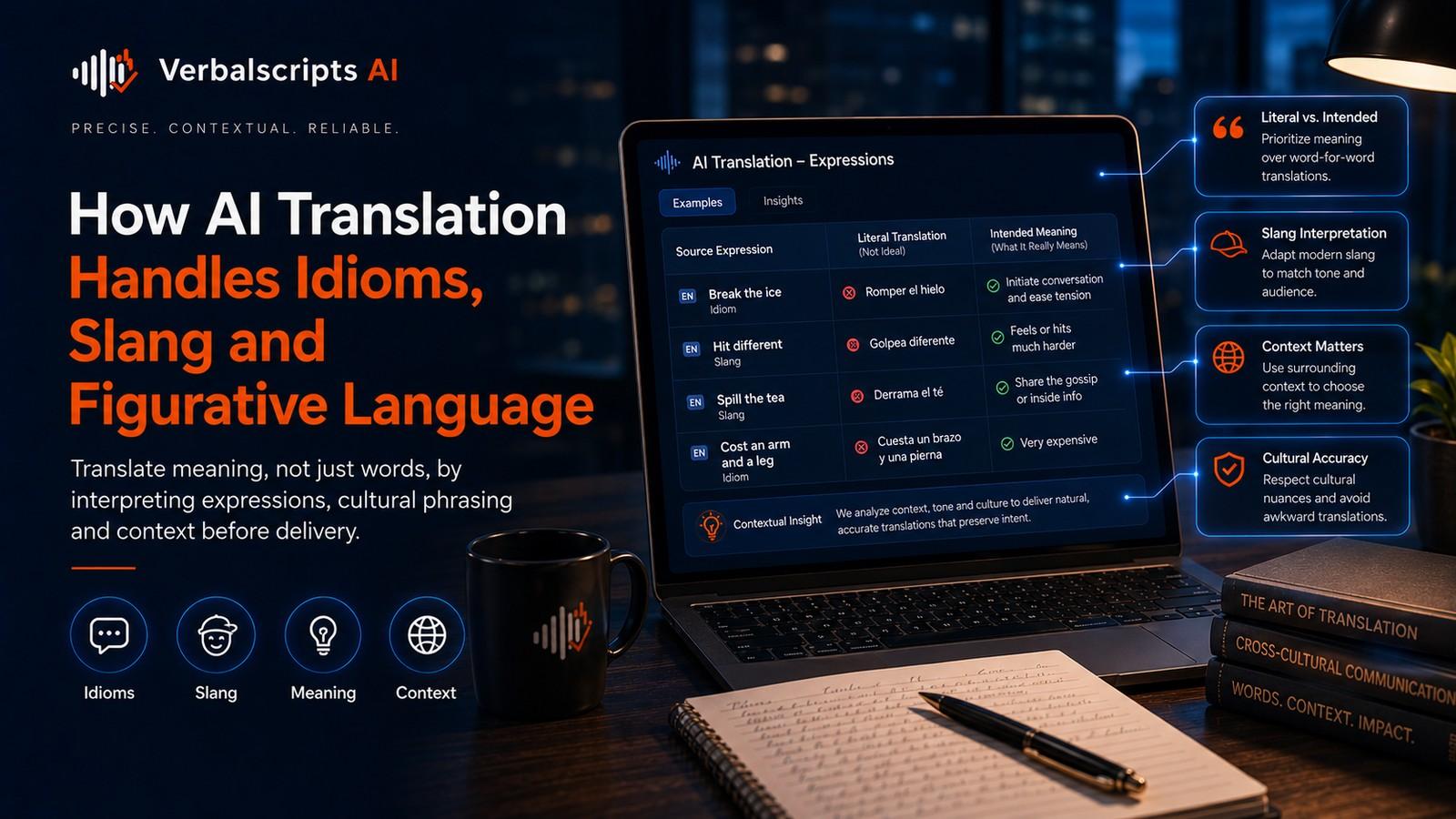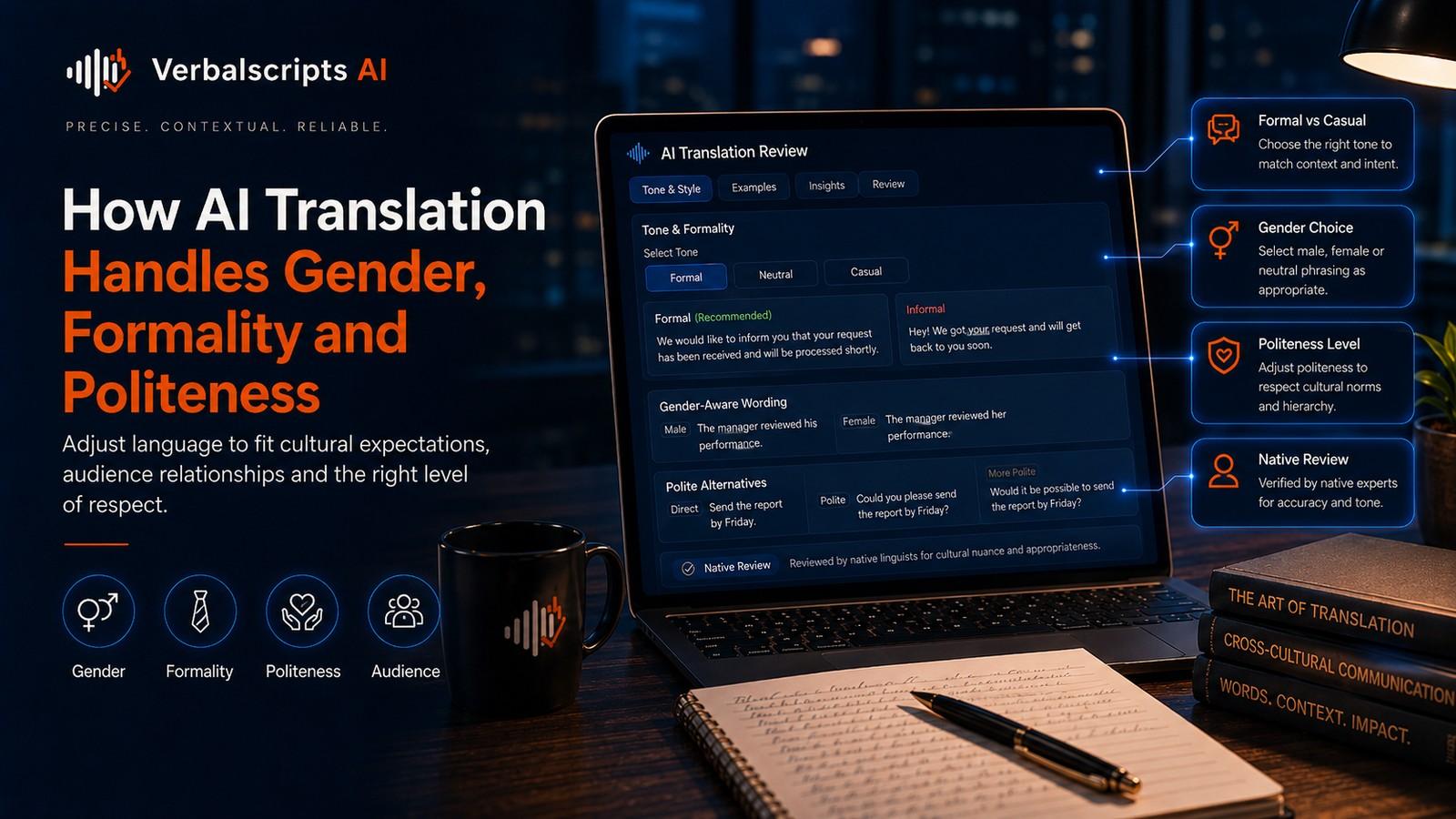
How does AI translation handle gender, formality and politeness? Modern systems infer these features from words, names, surrounding sentences, document context and learned cultural patterns. They can also follow explicit instructions such as “use formal address” or entity-level gender information. Errors occur when the source is ambiguous or when the model relies on stereotypes rather than evidence. For sensitive or customer-facing content, locale-specific rules and human review improve reliability.
Translation often forces a system to make social and grammatical choices that the source language never states explicitly.
For production multilingual workflows, see our AI Translation service for the delivery path behind the guidance in this article.
English “you” can address one person or many, a close friend or a senior official. English “they” can refer to one person without specifying gender. A phrase that sounds neutral in one language can require a gendered adjective, a formal pronoun or an honorific in another.
These are not minor grammatical details. They shape identity, respect, distance and tone.
A good system should distinguish between information that is known, information that is implied and information that is not specified.
Why languages force different choices
Languages encode social information differently.
Some distinguish formal and informal second-person pronouns. Some mark gender on nouns, adjectives, verbs or past participles. Some use honorific systems tied to status and relationship. Some routinely omit pronouns because verb morphology contains enough information.
Translation therefore involves more than semantic equivalence. The target sentence must be socially and grammatically appropriate.
The difficulty appears when the source language is underspecified.
Gender ambiguity
Consider:
“Taylor is a doctor. They joined the clinic last year.”
English does not necessarily reveal Taylor’s gender. A target language may require a gendered noun or adjective.
If the system selects a masculine or feminine form without evidence, it has added information.
Research on gender bias in machine translation has documented how systems can reflect statistical associations in training data. Occupations are a classic example: a model may infer gender from stereotypes even when the source gives no such clue.
What gender bias looks like in translation
Common patterns include:
- assigning men to stereotypically male occupations;
- assigning women to care-oriented occupations;
- using masculine forms as default;
- resolving ambiguous names based on frequency;
- failing to maintain gender consistently across multiple sentences;
- ignoring explicit pronoun evidence elsewhere in the document.
The harm is both linguistic and representational.
A translation can be grammatically fluent and still misgender the person it describes.
Research on gender-inclusive translation
The NLP community has built dedicated benchmarks and mitigation techniques for this issue.
The 2021 TACL survey *Gender Bias in Machine Translation* synthesized research on how gender disparities affect translation systems. MT-GenEval later introduced counterfactual and contextual evaluation across eight language pairs to test gender accuracy in realistic multi-sentence settings.
More recent research has focused on preserving gender ambiguity and generating alternative gendered forms. A 2025 study found that many evaluated systems still failed to produce gender-neutral translations when the source was ambiguous and the target language made neutrality difficult.
The takeaway is not that automation cannot handle gender. It is that generic accuracy metrics do not adequately test this dimension.
Explicit gender information improves control
When gender is known and relevant, the workflow should provide it explicitly rather than hoping the model infers it from a name.
For example:
- speaker A: woman;
- speaker B: man;
- Jordan Lee: nonbinary, use approved target-language strategy;
- customer gender: unknown; preserve neutrality where possible.
A 2024 NAACL study on fine-grained gender control showed that large language models can use entity-level gender information to improve gendered translation. Production systems can apply the same general principle: structured metadata reduces unsupported guessing.
When gender should remain unspecified
The translation should preserve ambiguity when the source intentionally or materially leaves gender open, unless target grammar makes that impossible.
Possible strategies vary by language:
- use gender-neutral nouns;
- restructure the sentence;
- omit an unnecessary pronoun;
- use pluralization where stylistically acceptable;
- generate alternatives;
- flag for human decision.
There is no universal solution because grammatical systems differ.
In legal, research or evidentiary content, preserving source uncertainty may be more important than producing the most stylistically elegant sentence.
Formality and the problem of “you”
English often leaves social distance unmarked. Other languages distinguish it explicitly.
Examples include contrasts such as informal versus formal second-person pronouns and verb forms. The correct choice can depend on:
- age;
- relationship;
- customer-service convention;
- brand policy;
- industry;
- region;
- whether one or several people are addressed.
A model may infer the wrong register if the project does not specify it.
For product localization, formality should be a locale-level decision, not a sentence-by-sentence improvisation.
Formality is part of brand voice
A brand that uses informal address in one country may deliberately choose formal address in another.
The goal is not to make every locale linguistically identical. It is to create a comparable relationship with the reader.
A translation style guide should specify:
- default second-person form;
- exceptions by content type;
- whether titles are used;
- preferred greetings and closings;
- level of directness;
- contractions or colloquial forms;
- customer-support etiquette.
Research on controlling formality in machine translation has shown that stylistic formality can be modeled explicitly, supporting the idea that register should be treated as a translation parameter.
Politeness is more than a pronoun
Politeness can be encoded through:
- honorifics;
- verb endings;
- indirectness;
- titles;
- sentence-final particles;
- softening expressions;
- apologies;
- requests rather than commands;
- word choice.
A sentence that is grammatically formal can still sound rude if its pragmatic style is wrong.
This matters for support, healthcare, public services, hospitality, education and workplace communication.
Honorifics and social hierarchy
Some languages have rich honorific systems. A title or verb form can indicate the relationship between speaker, listener and person being discussed.
Translation without role context can therefore be risky.
Useful metadata may include:
- speaker role;
- recipient role;
- institutional hierarchy;
- customer versus employee;
- patient versus clinician;
- judge versus witness;
- professor versus student.
In dialogue translation, speaker labels can materially improve politeness decisions.
Number ambiguity
The same family of problems applies to singular and plural.
English “you” does not reveal whether one or multiple people are being addressed. Some target languages require the distinction.
UI strings are especially vulnerable because they often appear without context.
A localization platform should describe whether a message addresses:
- one user;
- a team;
- the general public;
- a household;
- multiple selected recipients.
Gender, number and formality interact
These features should not be treated independently.
A target verb may need to agree simultaneously with:
- gender;
- number;
- politeness level.
Changing one choice can require changes across the sentence.
That is why post-processing a single pronoun after translation often fails. The system may need to regenerate or edit the whole grammatical structure.
Names are weak evidence
A name can suggest gender statistically, but it is not reliable identity information.
Names cross cultures, are used by multiple genders and may be unfamiliar to the model. Inferring gender from a name alone can produce errors.
Research on ambiguous names and gender-inclusive translation has specifically highlighted this problem.
Production workflows should prefer explicit metadata over probabilistic name inference when identity matters.
Customer support example
Source:
“Hi Alex, we’ve reviewed your request. You can reply to this email if you need anything else.”
A good translation has to choose:
- greeting style;
- formal or informal address;
- singular/plural form;
- gender-neutral or gendered structures;
- appropriate level of warmth.
These choices should come from the support style guide, not from the model’s mood.
Legal and official communication
Official documents often require conservative handling.
The system should avoid:
- inventing honorifics;
- inferring gender that is not stated;
- changing formal address levels inconsistently;
- modernizing titles without instruction;
- softening legal obligations.
Where a name or role determines an inflection, the reviewer should verify it against authoritative information.
Medical and patient-facing communication
Politeness affects trust, but clarity and safety remain central.
Patient instructions should use respectful forms appropriate to the locale while avoiding unnecessary complexity. Gendered language should reflect known information or approved inclusive-language policy.
Do not let stylistic politeness alter dosage, warnings or clinical meaning.
A practical workflow
Step 1: Define locale-specific defaults
For each market, specify formal/informal address and inclusive-language policy.
Step 2: Supply entity metadata
Provide gender, number and role only when known and relevant.
Step 3: Translate with document context
Allow the model to see earlier pronouns and relationships.
Step 4: Run consistency checks
Check that the same entity does not switch gender or honorific unexpectedly.
Step 5: Human review
Use native reviewers for nuanced customer-facing, sensitive or high-stakes material.
Step 6: Record exceptions
Feed approved forms into the style guide and termbase.
How to evaluate performance
Build targeted test cases for:
- gender-unambiguous inputs;
- gender-ambiguous inputs;
- formal/informal address;
- singular/plural “you”;
- multiple entities;
- multi-sentence agreement;
- professional titles;
- dialogue roles;
- inclusive-language requirements.
Score not just grammar but whether the model added unsupported social information.
Common failure patterns
Stereotype completion
The model assigns gender based on occupation or context stereotype.
Register drift
The translation begins formally and becomes informal later.
Incorrect honorific
The model chooses a title unsupported by the source.
Unnecessary gender marking
A neutral sentence is rewritten to specify gender.
Agreement mismatch
A pronoun is corrected but adjectives or verbs remain inconsistent.
Over-politeness
The translation adds apologies or deference that changes the source tone.
Translation instructions that reduce social-language errors
A useful project brief should make social-language decisions explicit before the first segment is translated. State the expected relationship between speaker and reader, whether the audience is an individual or group, the default level of formality, how unknown gender should be handled, and which titles are approved. For dialogue, preserve speaker roles and turn history. For recurring entities, keep stable metadata across the entire document. These small pieces of context prevent the model from re-deciding identity and politeness independently in every sentence.
Frequently asked questions
Why is gender harder in translation than in the source?
The target language may require grammatical gender even when the source language does not specify it.
Can AI translate formal and informal “you” correctly?
Often, if context is clear. For consistent product or brand communication, the preferred form should be specified in a locale style guide.
Should AI infer gender from a person’s name?
Not when identity matters. Names are uncertain signals. Use explicit metadata or preserve ambiguity.
What is gender-inclusive translation?
It aims to translate without introducing unnecessary gender assumptions and to use appropriate target-language strategies when the source is gender-neutral or inclusive.
When is human review most useful?
When the content affects identity, customer relationships, legal meaning, healthcare, public communication or culturally sensitive brand voice.
Conclusion
Gender, formality and politeness reveal why translation is fundamentally contextual.
The best AI systems can model these features and follow explicit controls, but they should not invent information simply because the target language demands a choice. Successful multilingual workflows define locale rules, provide known metadata, preserve ambiguity where appropriate and use human review for decisions with social or reputational consequences.
Research references
- Savoldi et al. (TACL 2021), *Gender Bias in Machine Translation*:
- Currey et al. (EMNLP 2022), *MT-GenEval*:
- Lee et al. (NAACL 2024), *Fine-grained Gender Control in Machine Translation with Large Language Models*:
- Dawkins, Nejadgholi & Lo (GITT 2025), *Gender-Neutral Machine Translation Strategies in Practice*:
- Niu, Martindale & Carpuat (EMNLP 2017), *A Study of Style in Machine Translation*: