Can AI translate education and e-learning content effectively? Yes. AI can be very useful for multilingual lesson content, transcripts, subtitles, course descriptions and draft learning materials. Quality improves when the workflow preserves terminology, matches the learner’s level, localizes UI and assessment instructions, and includes review for accuracy, pedagogy and accessibility.
Education content is one of the richest translation categories because it combines explanation, instruction, assessment and accessibility.
For production multilingual workflows, see our AI Translation service for the delivery path behind the guidance in this article.
A single course may include lesson pages, slides, quizzes, assignments, discussion prompts, subtitles, transcripts, downloadable PDFs and LMS navigation. AI can help translate these materials quickly and make learning more accessible across languages. But educational translation is not only about understandable text. It is about learning outcomes.
If the student cannot follow the concepts, instructions or assessment criteria, the translation has failed, even if the sentences sound fluent.
The key question is not simply “Is the content translated?” It is “Can the learner use it successfully?”
What counts as educational content?
Educational translation may include:
- lesson text;
- slides;
- study guides;
- assessments and quizzes;
- assignment instructions;
- discussion prompts;
- subtitles and transcripts;
- LMS navigation;
- teacher notes;
- certificate language;
- onboarding and support content.
Different elements require different translation strategies.
Learner level matters
Educational content should be adapted to the intended learner.
A translation for:
- primary students;
- university students;
- professionals;
- technical trainees;
- language learners
cannot be judged by the same standard.
The vocabulary, sentence length, examples and tone should align with the audience’s knowledge level and educational purpose.
Pedagogical clarity
An educational translation should preserve:
- learning objective;
- explanation sequence;
- examples;
- key terms;
- transitions;
- summary logic.
A sentence-by-sentence translation can still fail if the overall teaching flow becomes harder to follow.
Review should ask:
- Does the explanation still build logically?
- Are examples understandable?
- Are the key takeaways still prominent?
Terminology and concept consistency
Courses often reuse core terms over many modules.
Create a glossary for:
- subject-specific terminology;
- curriculum labels;
- LMS actions;
- assessment language;
- recurring definitions.
This is especially important in STEM, legal education, healthcare training and certification programs.
Assessments and quizzes
Assessments need careful handling because wording affects performance.
Review:
- question stem meaning;
- answer-option logic;
- distractor plausibility;
- instructions;
- grading language;
- time constraints.
A translation that makes the right answer more obvious (or less clear) can change the validity of the assessment.
This is especially true for multiple-choice, true/false and scenario-based learning.
Discussion prompts and assignments
Open-ended educational content should preserve the intended task.
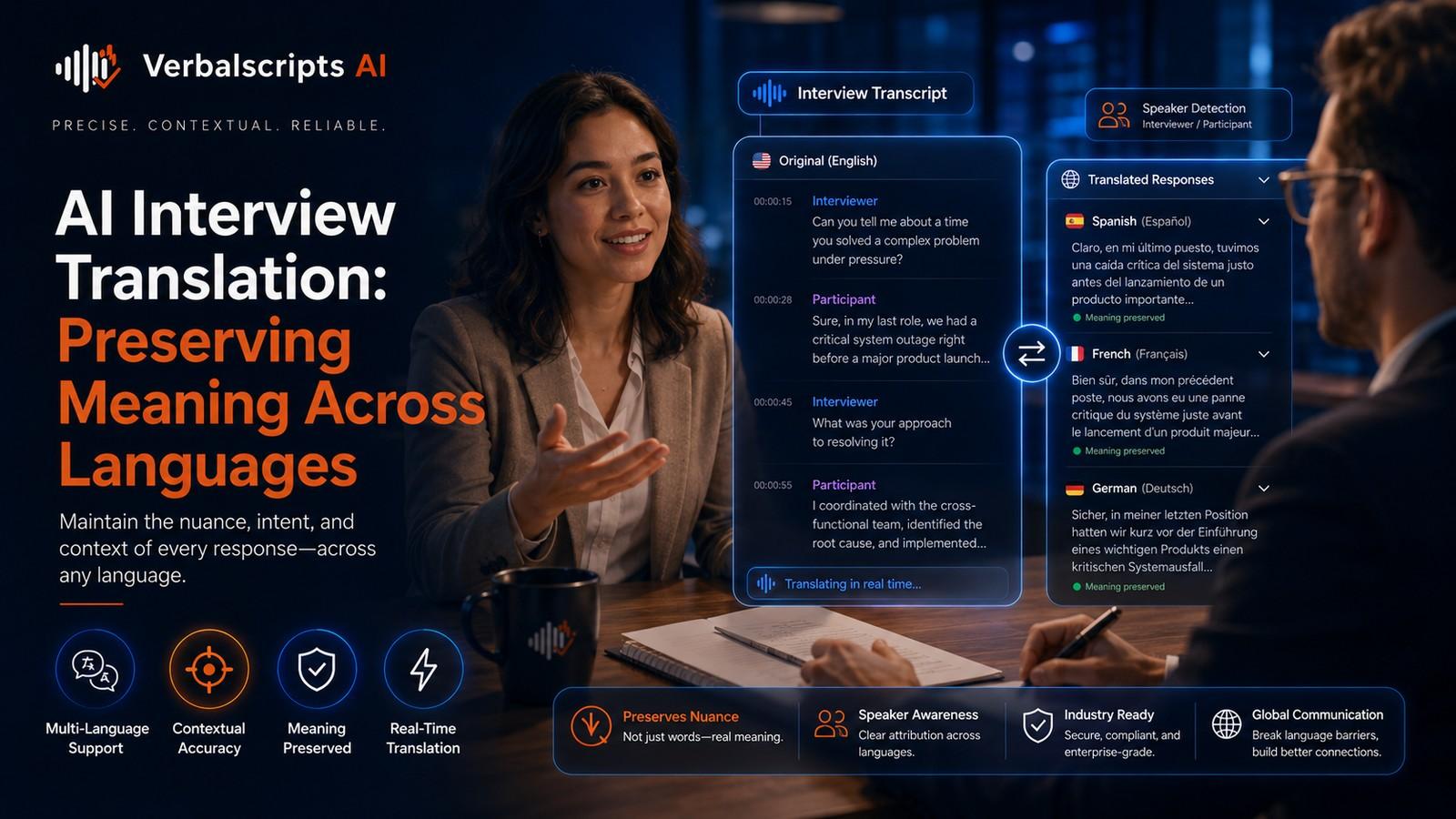
For example, “analyze,” “compare,” “describe,” and “evaluate” are not interchangeable verbs in education. They signal different cognitive expectations.
AI should therefore preserve the action the learner is being asked to perform.
Subtitles, transcripts and lecture media
E-learning often relies on video and audio.
Translation may involve:
- subtitle translation;
- caption timing;
- transcript translation;
- voiceover scripts.
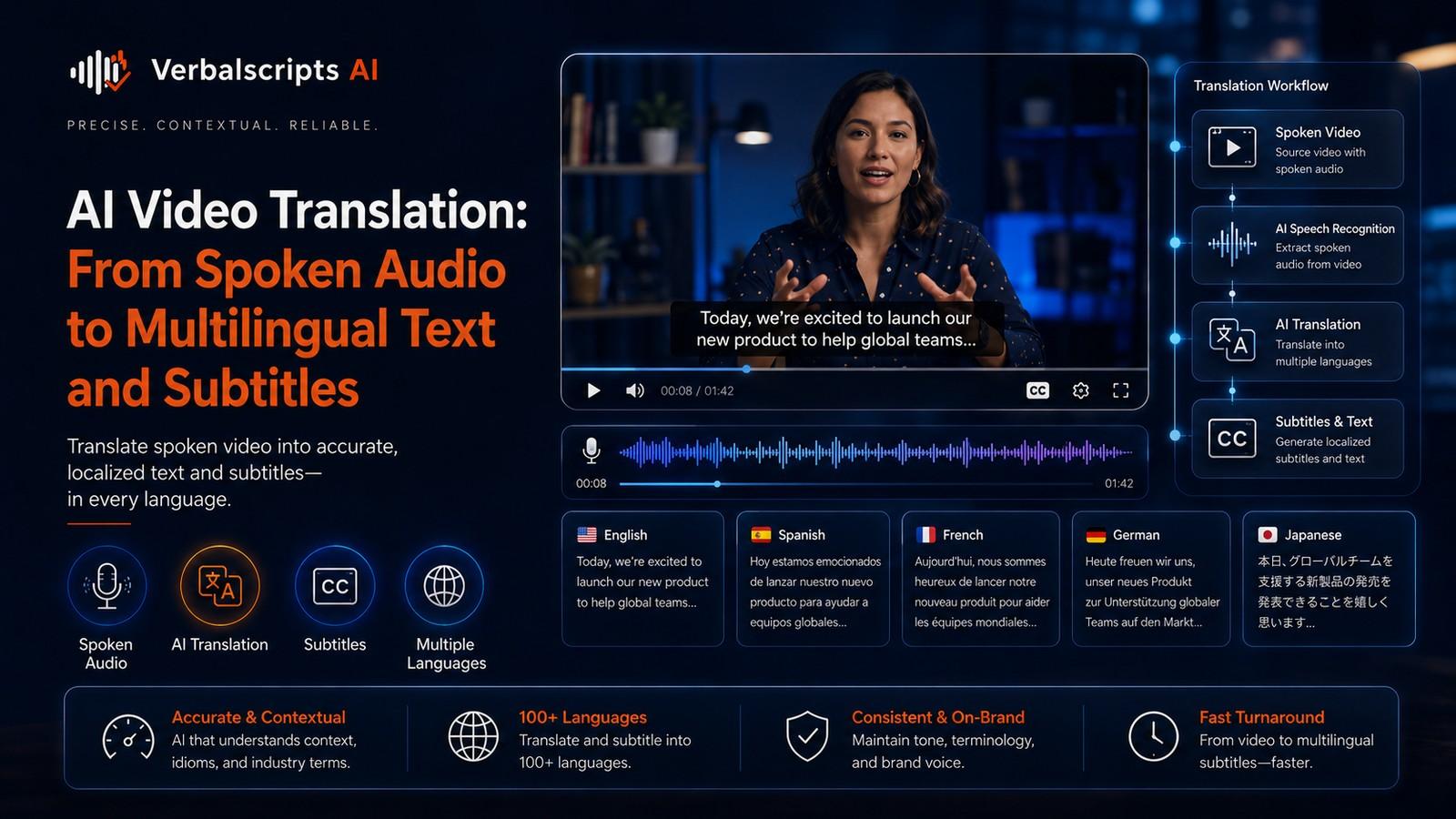
Subtitles introduce length and timing constraints. A perfect full-sentence translation may not fit on screen or may move too quickly for learners to read.
For recorded instruction, transcript and subtitle workflows should be coordinated so the target-language learning experience remains coherent.
LMS and platform UI
The course itself may be translated while the platform UI remains inconsistent.
Check:
- navigation labels;
- module names;
- buttons;
- progress indicators;
- quiz instructions;
- notifications;
- error messages.
A translated lesson with an untranslated quiz button can confuse learners and reduce completion rates.
Accessibility in learning content
Educational accessibility is essential.
Translated content should consider:
- page language declaration;
- alt text;
- heading structure;
- caption availability;
- readable formatting;
- compatibility with assistive technologies.
W3C’s guidance on declaring HTML language is relevant here as well, especially for web-based course content.
Accessibility and translation quality reinforce one another: clear structure helps all learners.
Cultural and contextual adaptation
Educational content may include:
- examples;
- references;
- historical context;
- units of measurement;
- legal or institutional references.
A localized example may improve comprehension, but the course goal determines how much adaptation is appropriate. A mathematics course may only need language translation; a civic-education module may need deeper local context.
Academic integrity and assessment fairness
If AI is used to translate exams or assessments, fairness becomes important.
Questions should remain:
- equivalent in difficulty;
- equivalent in meaning;
- free from ambiguity introduced by translation.
For high-stakes testing, stronger review and validation are advisable.
Internal training and enterprise learning
Corporate learning content shares many of the same requirements:
- procedural clarity;
- role-specific terminology;
- quiz accuracy;
- UI consistency;
- policy alignment.
AI can be highly effective here because internal training often uses recurring formats and frequent updates.
AI strengths in educational workflows
AI is strong for:
- scaling lesson translation;
- translating transcripts and support content;
- adapting repeated course structures;
- helping teachers or training teams produce drafts faster.
It is especially useful where organizations need multilingual access quickly.
AI limitations
AI may:
- overcomplicate beginner content;
- mis-handle specialized educational vocabulary;
- distort assessment wording;
- miss on-screen or embedded media language;
- produce subtitles that are too long.
These limits are manageable if the workflow includes review.
Human review priorities
Review should focus on:
- subject accuracy;
- pedagogical clarity;
- assessment fairness;
- accessibility;
- learner level;
- consistency between lesson, quiz and platform UI.
A teacher, trainer or subject-aware reviewer adds value beyond pure language editing.
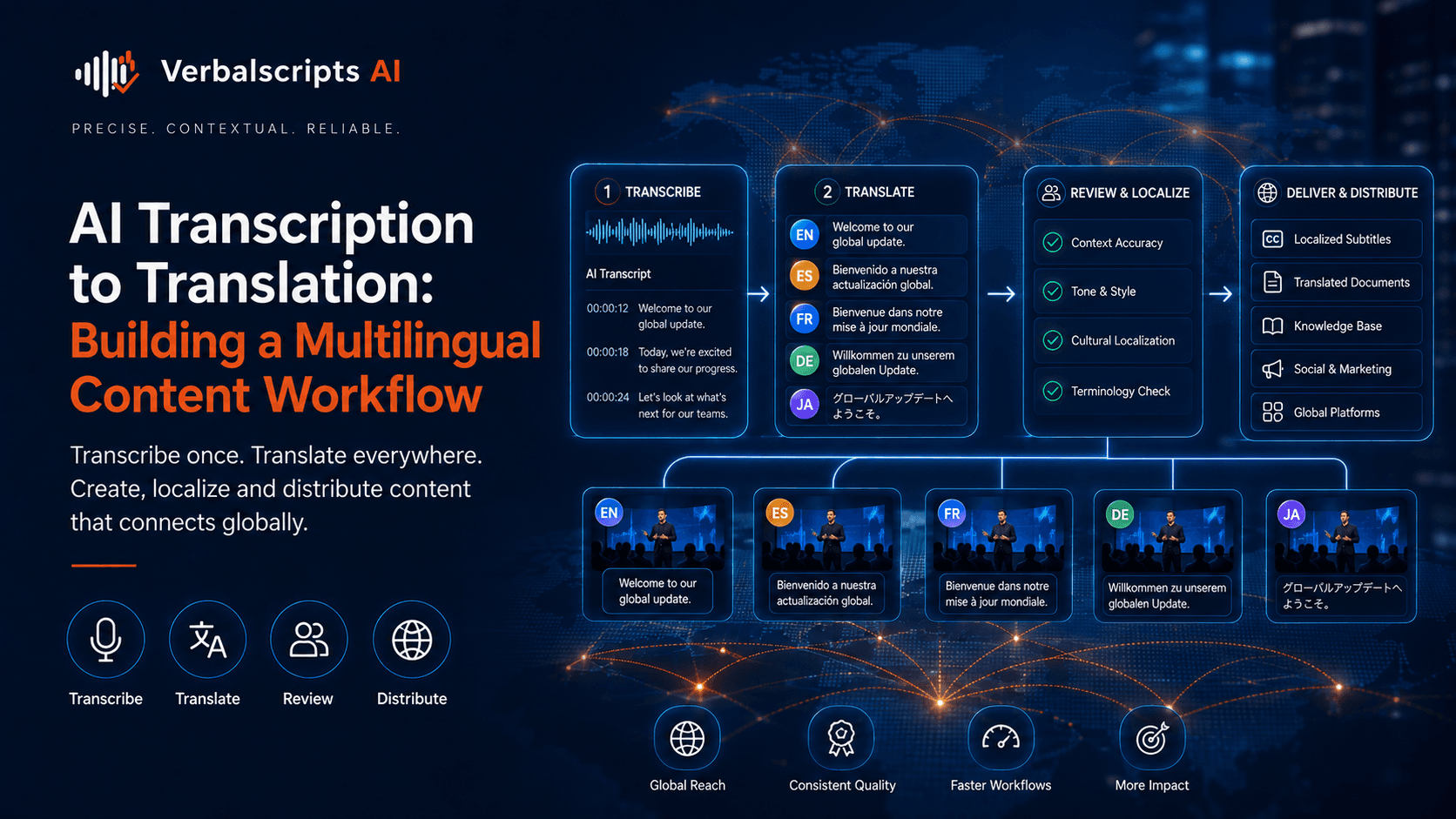
A practical workflow
Step 1: classify the learning assets
Lesson, quiz, video, transcript, LMS UI or downloadable resource?
Step 2: define the learner audience
Age, proficiency, professional level and course objective.
Step 3: prepare terminology
Subject terms, course labels and platform terms.
Step 4: AI translation
Generate draft learning content with level-appropriate language.
Step 5: review assessments and media
Check fairness, subtitle timing and instruction clarity.
Step 6: accessibility QA
Check structure, captions, alt text and language metadata.
Step 7: learner-level review
Ensure the translation fits the intended educational context.
Common failure patterns
Concept drift
A key educational concept is translated inconsistently across modules.
Overly advanced wording
Beginner learners receive language that is too dense.
Assessment distortion
Question meaning or difficulty changes.
Subtitle overload
The translation is too long for comfortable reading speed.
Platform mismatch
The course is translated, but the LMS labels are not.
Weak accessibility
Translated content lacks proper structure or metadata.
Course maintenance and update cycles
Courses evolve. A module may gain a new quiz, a revised policy example or a re-recorded lecture. AI is useful because it can accelerate those updates and help teams keep multiple language versions aligned. Still, update workflows should track what changed and which translated assets are now out of date. Otherwise multilingual courses gradually drift apart in quality and content coverage.
Instructor and learner experience
Education translation is strongest when both sides of the learning experience are considered. Instructors need reliable course notes, accurate assessment wording and manageable review workflows. Learners need explanations they can understand, interfaces they can navigate and tasks they can complete confidently. AI can support both groups, but only if the translation process is treated as part of instructional design rather than a purely downstream language service.
Multiformat course ecosystems
Modern learning programs often exist across multiple formats: lesson pages, slide decks, downloadable worksheets, practice quizzes, videos and certificates. Translation quality depends on keeping these assets aligned. Learners should not encounter one term in the video subtitle, another in the worksheet and a third in the quiz.
Localization of examples and learner support
Some educational assets benefit from localized examples, especially when the source assumes a particular cultural or institutional context. In addition, help content such as onboarding instructions, FAQ pages and technical support for the LMS should be translated consistently with the course itself. Learning is smoother when support language and instructional language match.
Measuring educational effectiveness
Translation quality in education can also be evaluated through learner outcomes: comprehension, completion, quiz performance, drop-off points and support requests. Those signals help identify whether the multilingual content is genuinely helping learners or whether certain modules, assessments or subtitles still need improvement.
Reuse across training programs
Educational organizations often reuse learning assets across departments, cohorts or customer-training programs. AI translation becomes especially efficient in these settings because lessons, assessments and supporting documents can be updated and localized systematically. Consistent terminology and reusable templates help maintain quality while controlling effort.
The value of subject-aware review
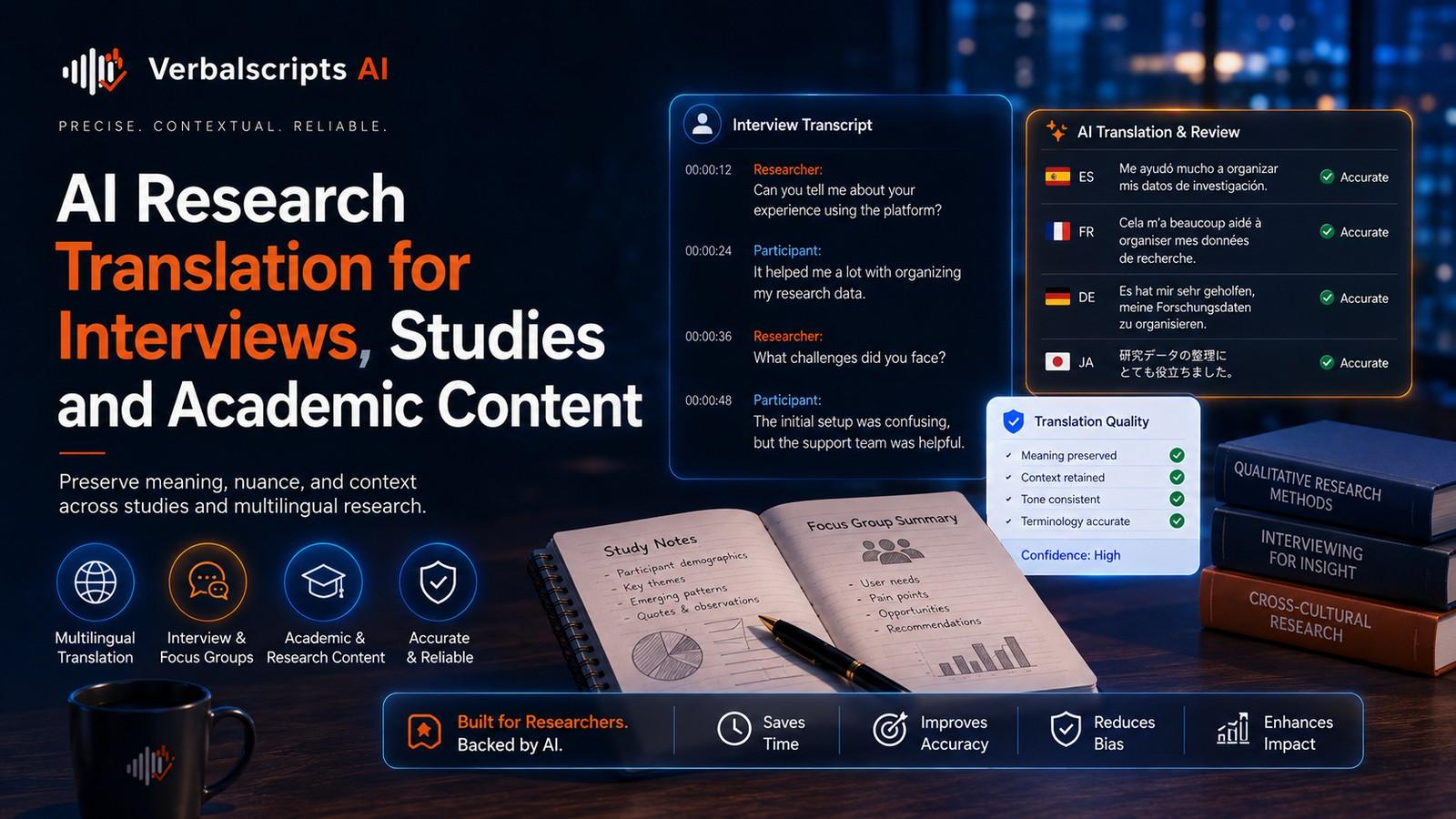
Language accuracy alone does not guarantee educational value. A reviewer who understands the subject can see whether a translated analogy still works, whether a quiz item still tests the same concept and whether the lesson sequence still makes sense. That perspective is especially useful in technical training and certification content.
Review by real learning context
It is helpful to test translated learning assets in the context learners will actually use: mobile lesson views, LMS quizzes, projected slides or subtitle playback. Some issues only appear there, for example, crowded quiz options, truncated subtitles or confusing button labels. Contextual QA is therefore part of educational quality, not just visual polish.
Long-term multilingual program quality
Educational translation is strongest when teams build a repeatable system: terminology governance, content templates, review guidelines and update tracking. AI then becomes a force multiplier for a sound instructional process rather than a shortcut around one. That long-term view is especially important for organizations running ongoing academies, customer education programs or recurring training courses.
Support for multilingual instructors and administrators
Educational ecosystems also include instructors, administrators and support staff who may need translated dashboards, notifications, guidance and reporting. When those operational layers are localized consistently with the learner-facing material, the overall program runs more smoothly and fewer misunderstandings occur.
Certificates, credentials and learner records
Some learning programs issue certificates, completion records or compliance acknowledgments. These materials should be translated consistently with the course language and reviewed for formal correctness, because they may be retained, presented to employers or used in compliance workflows after the training itself is finished.
Ongoing support after course launch
Translation work does not end when the course is published. Learner questions, updated assignments and revised platform flows can reveal where wording needs refinement. A feedback channel after launch helps keep multilingual learning content accurate and useful over time.
Frequently asked questions
Can AI translate online courses?
Yes. AI can help with lesson content, transcripts, subtitles, assessments and platform-related text.
Do quizzes need special review?
Yes. Assessment wording can affect fairness and validity, so quizzes deserve stronger review than ordinary lesson text.
Is AI useful for subtitle translation in e-learning?
Yes, but subtitle timing and on-screen reading constraints still need QA.
Why does learner level matter?
Because a translation that is technically accurate can still be educationally ineffective if it is too advanced or not pedagogically clear.
When is human review most important?
For assessments, technical or specialist subjects, certificate content and high-visibility learner-facing materials.
Conclusion
AI education translation is most valuable when it supports learning, not just multilingual publication.
Preserve concepts, instructions and assessment intent. Match the learner’s level, coordinate subtitles and transcripts, localize the LMS experience and review for accessibility. When those elements are in place, AI can make education and training more reachable across languages without sacrificing instructional quality.
Research references
- W3C, Declaring language in HTML:
- Microsoft Learn, Localization overview:
- Google Search Central, AI features and your website:
- Digital.gov, Plain language guide series: