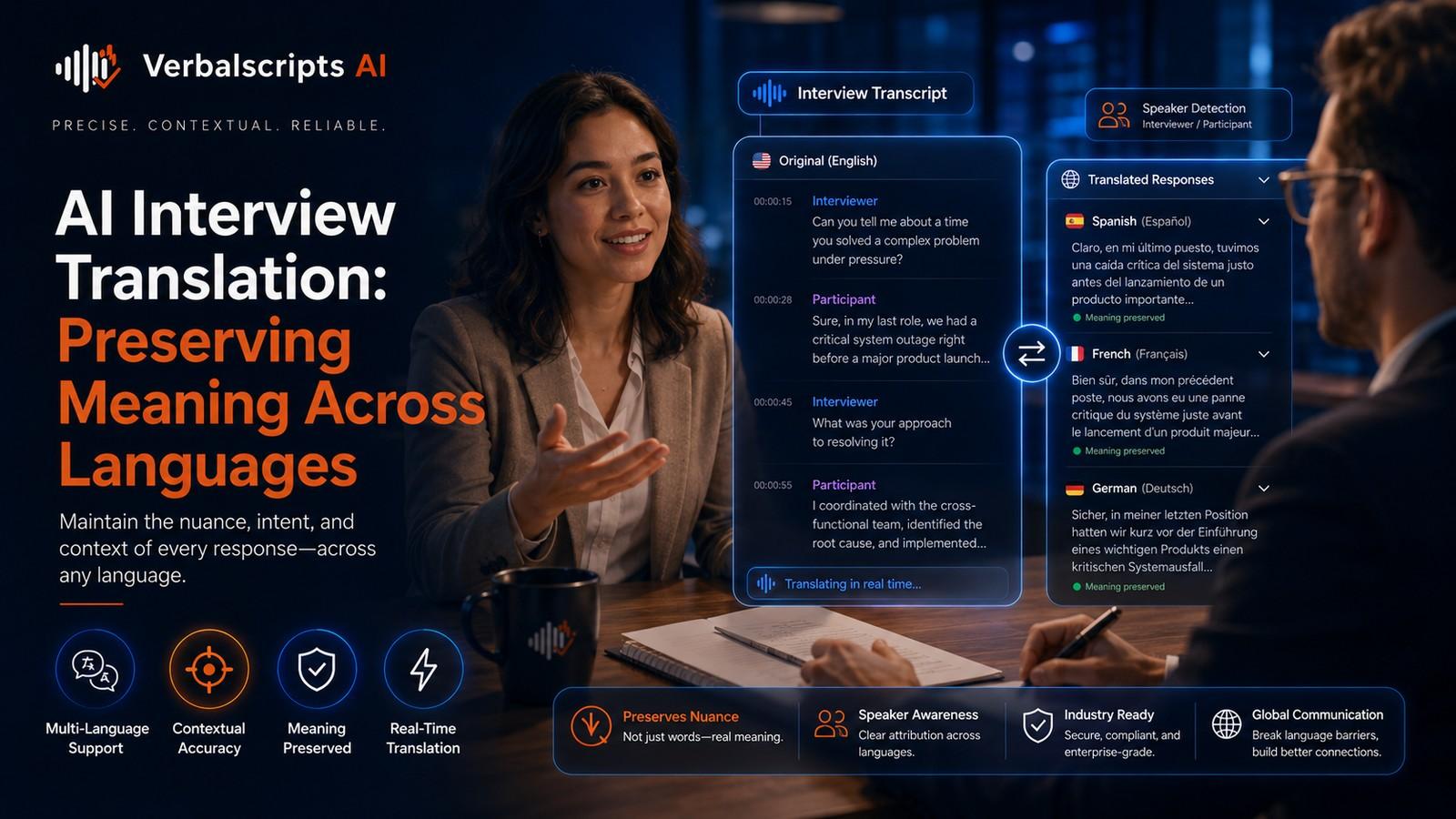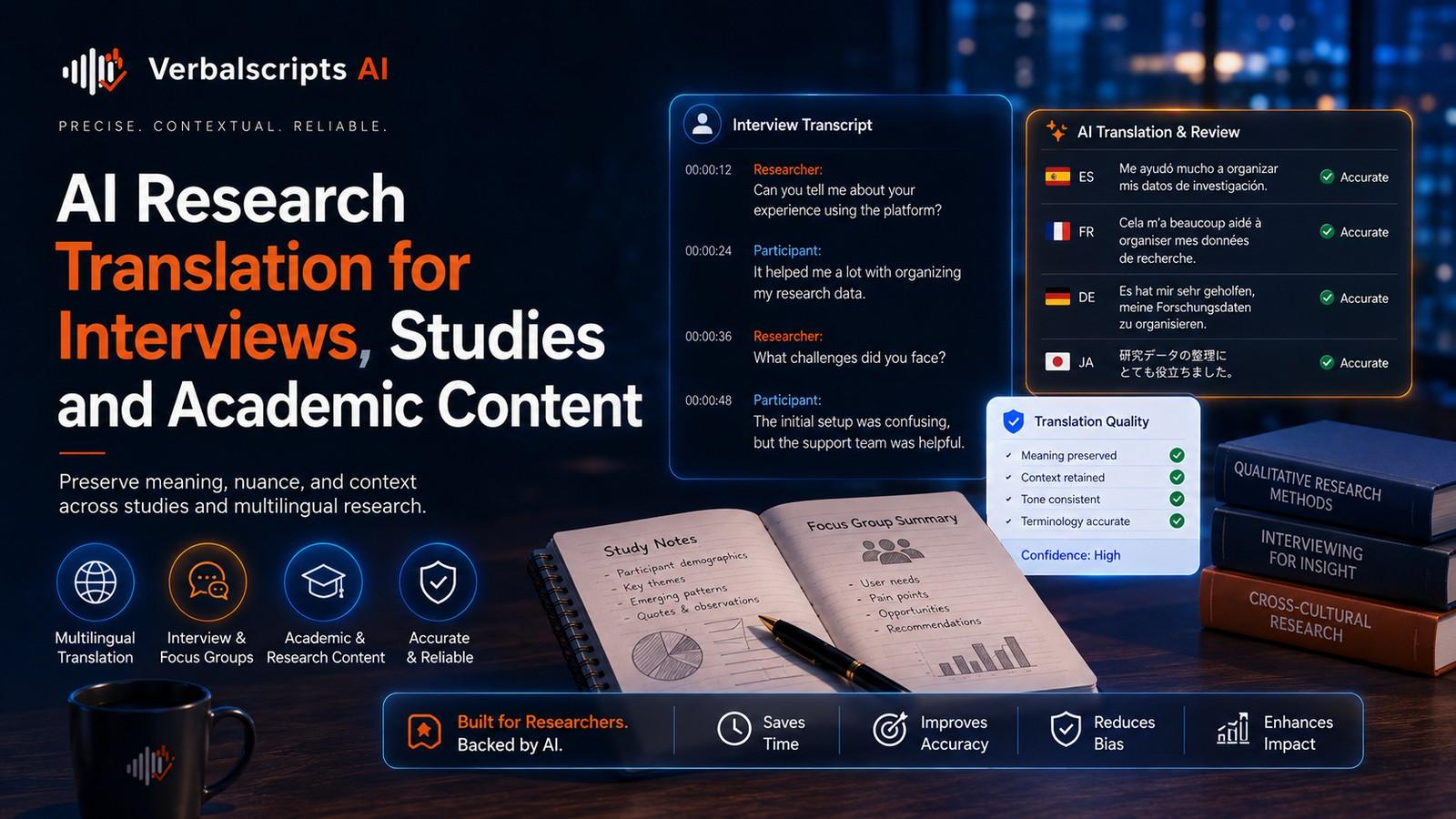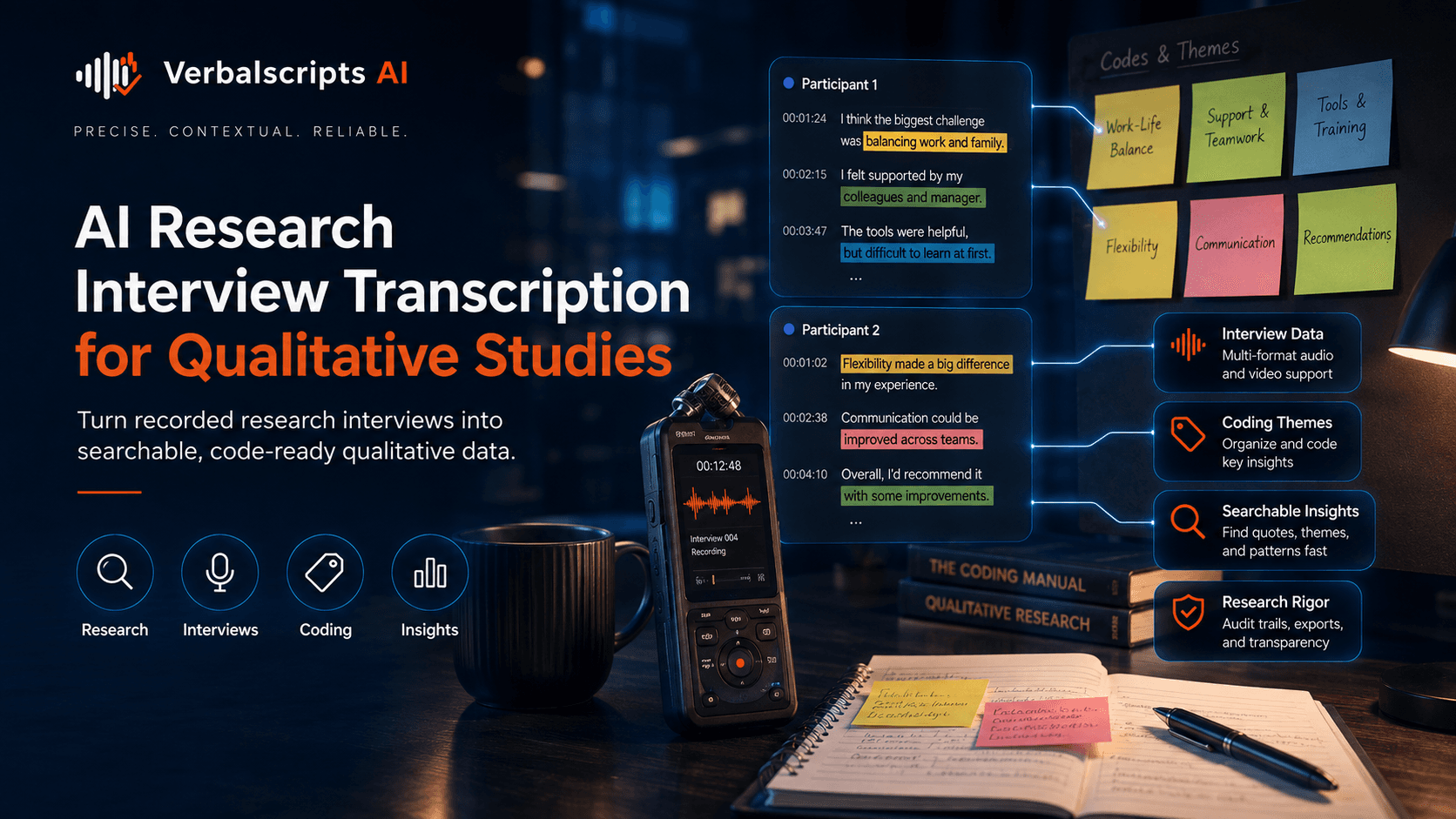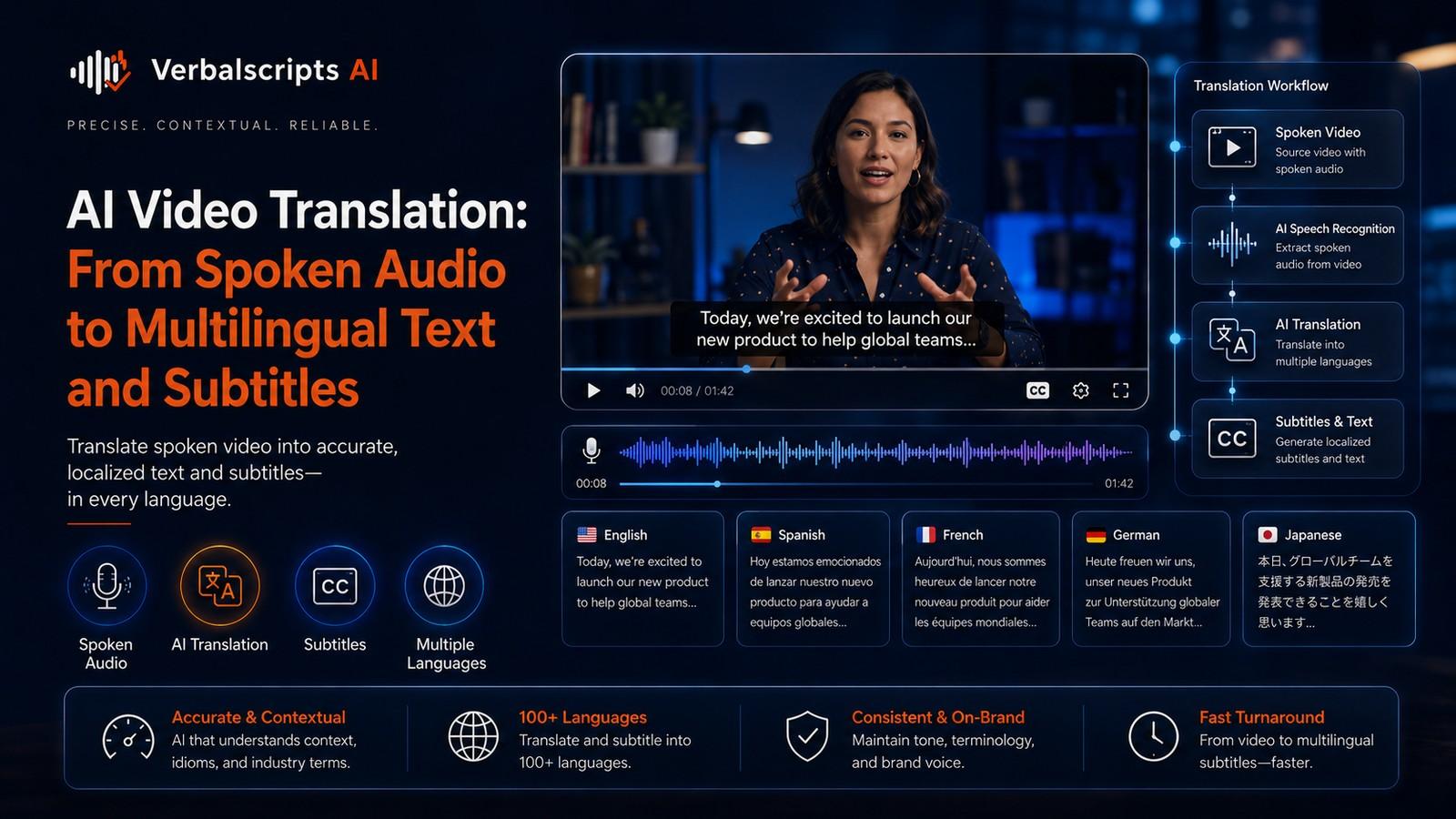
Can AI help translate research interviews, studies and academic content? Yes. AI can assist with interview transcript translation, draft article translation, multilingual literature workflows and repeated study documentation. Strong results depend on preserving terminology, speaker meaning, uncertainty, quotations and structured research materials. Human review is especially important when translated text will be analyzed as data, used for participant consent, published academically or cited as evidence.
Research translation is not only about changing language. It is about preserving evidence.
For production multilingual workflows, see our AI Translation service for the delivery path behind the guidance in this article.
A translated interview, study instrument, participant information sheet, article abstract or literature review may later be analyzed, cited, coded, taught or published. That means the translation has to do more than sound natural. It has to preserve meaning carefully enough that researchers, readers and participants can rely on it.
AI can dramatically speed this work, especially where large multilingual corpora are involved. But research content needs methodological care.
Research translation should therefore support both accuracy and traceability.
Types of research content
AI may be used for:
- interview transcripts;
- focus group transcripts;
- participant information sheets;
- consent forms;
- questionnaires and survey items;
- study protocols;
- abstracts and papers;
- grant applications;
- coding frameworks;
- presentation slides;
- data-collection instructions.
These have different purposes and therefore different translation requirements.
Interviews and qualitative data
Qualitative research translation is especially sensitive because language itself is part of the data.
When translating interviews, preserve:
- speaker identity labels;
- hesitations where analytically relevant;
- uncertainty;
- slang or culturally marked phrases;
- emotional tone;
- chronology.
A translation that over-smooths the speech can distort how participants expressed themselves. Researchers may later code the transcript for themes, attitudes or discourse patterns.
Quotations in publications
Academic publications often include translated participant quotations.
A useful workflow can include:
- source quote;
- literal or close translation;
- polished publication version if needed;
- translator or reviewer notes.
This preserves transparency. It also helps when reviewers or co-authors need to check how strongly the published translation reflects the original speech.
Survey and questionnaire translation
Questionnaires require more than linguistic equivalence.
Items need to preserve:
- construct meaning;
- response scale logic;
- instructions;
- recall period;
- cultural appropriateness.
A change that seems small can affect measurement validity. For research instruments, teams often use iterative review or cognitive testing rather than relying on one-pass translation alone.
Participant-facing documents
Participant information and consent materials must be understandable as well as accurate.
These documents may explain:
- study purpose;
- procedures;
- risks and benefits;
- confidentiality;
- voluntary participation;
- withdrawal rights.
If participants cannot clearly understand the translated document, ethical and procedural issues arise. Human review is strongly advisable.
Academic papers and abstracts
AI can help researchers translate:
- article drafts;
- abstracts;
- conference submissions;
- literature summaries;
- correspondence.
The main challenges include:
- terminology;
- citation phrasing;
- field-specific conventions;
- cautious academic tone;
- hedging language.
Academic writing often relies on calibrated claims. Overstating certainty in translation can misrepresent the research.
Terminology in research translation
Every field has its own vocabulary.
Create a glossary for:
- theoretical concepts;
- method names;
- domain-specific terms;
- statistical terms;
- instrument names;
- institution names.
A translation that varies a key concept from section to section makes interpretation harder for readers and researchers alike.
Statistical and numeric content
Research documents often contain:
- p-values;
- confidence intervals;
- sample sizes;
- tables;
- scales;
- variable names;
- model outputs.
Protect:
- numbers;
- statistical notation;
- citations;
- table references;
- variable names where required.
Formatting can be localized if needed, but the underlying data must remain unchanged.
Multilingual literature review support
AI can also support researchers who need to read sources across languages.
In this use case, the translation may be for internal understanding rather than publication. That lowers the output threshold somewhat, but readers should still be cautious.
A useful practice is to label outputs clearly:
- AI draft translation;
- reviewed translation;
- publication-ready translation.
Different labels support different research uses.
Traceability matters
Research workflows often need an audit trail.
Record:
- source file;
- language pair;
- date of translation;
- glossary version;
- reviewer;
- whether the output is a draft or final;
- how quotes were handled.
Traceability is especially important when the translation itself becomes part of the research record.
Human review levels
Research-assistant review
Useful for internal understanding and preliminary coding.
Bilingual subject review
Useful for interview data, participant materials and paper drafts.
Specialist review
Important for highly technical fields, publication-critical material or ethics-sensitive content.
The appropriate level depends on whether the translation is research support or research evidence.
Cultural meaning and context
Academic and qualitative translation often involves culturally embedded meaning.
A direct literal translation may miss:
- social references;
- idioms;
- local institutions;
- honorifics;
- culturally specific categories.
In some cases a translator note or retained source term may be more honest than a forced equivalent.
AI strengths in research contexts
AI is useful for:
- first-pass transcript translation;
- rapid literature screening;
- multilingual abstract drafting;
- terminology extraction;
- repetitive study-document translation;
- cross-language research collaboration.
These strengths can save substantial time in multi-country or multilingual projects.
AI limitations
AI may:
- smooth out hesitation or ambiguity;
- over-regularize spoken language;
- select incorrect scholarly terminology;
- mistranslate questionnaire nuance;
- make claims sound more certain than the source;
- mis-handle embedded quotations.
Those issues do not make AI unusable. They define where review should concentrate.
A practical workflow
Step 1: classify the research material
Interview, survey, participant material, article draft or protocol?
Step 2: define the purpose
Internal understanding, coding, publication, participant communication or ethics submission?
Step 3: prepare terminology
Methods, concepts, institutions, variables and do-not-translate items.
Step 4: AI translation
Preserve structure, speaker labels and citations.
Step 5: automated QA
Check names, numbers, quotations and terminology consistency.
Step 6: human review
Review according to risk and methodological importance.
Step 7: document provenance
Label the output and keep translation records.
Common failure patterns
Over-smoothed interviews
The translated speech becomes more polished than the source.
Construct drift
A questionnaire item changes meaning subtly.
Terminology inconsistency
Core concepts vary across sections.
Claim inflation
A cautious academic statement becomes stronger in translation.
Citation or table mismatch
References and numbers are altered or misaligned.
Missing transparency
No distinction is maintained between AI draft and reviewed output.
Collaborative and cross-border research teams
Many research projects now involve collaborators across institutions and countries. AI translation can support these teams by reducing language barriers in protocol discussion, interview review and draft circulation. But collaboration improves further when the translation process is documented clearly. Team members should know whether they are reading a fast AI draft, a reviewed translation or the final publication version. That transparency reduces confusion during analysis and authorship.
Ethics and participant respect
Translation is also an ethical issue in research. Participants deserve information they can genuinely understand, not merely documents that have been run through a tool. Researchers likewise have an ethical responsibility not to overstate what a translated interview “means” if key linguistic nuance is uncertain. A careful workflow respects both the participant and the integrity of the findings.
Literature, source criticism and multilingual scholarship
Researchers often use AI translation to access literature they otherwise could not read efficiently. This can be extremely valuable for discovery and comparison. At the same time, readers should remember that a translated article or excerpt is still a mediated version of the source. Important conceptual passages, especially those affecting theory or interpretation, may warrant targeted human review or consultation with a domain expert.
Mixed-method and multi-output projects
Many research projects combine interviews, surveys, participant documents, presentations and publications. A translation workflow that treats each item separately can lose consistency across the project. Shared terminology, consistent treatment of key concepts and clear labeling of draft versus reviewed outputs help the whole research program stay coherent.
Publication readiness versus working translation
It is useful to distinguish a working translation used by the research team from a polished translation prepared for publication or public sharing. AI can serve both stages, but the review threshold should increase when the translated text becomes part of the public scholarly record.
Translation as part of methodology
For multilingual studies, translation decisions can influence the research method itself. How questions are phrased, how interview nuance is rendered and how quotes are selected for publication can all shape interpretation. Teams should therefore treat translation decisions as methodological notes worth documenting rather than invisible back-office tasks.
Teaching and dissemination
Research outputs are often reused in teaching, public communication or policy dialogue. AI translation can help widen access to this knowledge, but the target version should remain faithful to the source’s level of certainty, evidence and terminology. When research moves into public-facing channels, human review becomes even more valuable.
Data management and file structure
Research projects often involve multiple linked files: audio, transcripts, translations, coding sheets, participant materials and publication drafts. A disciplined file structure helps maintain traceability. Teams should know which transcript version was translated, whether the output was human-reviewed and how translated quotes relate back to the original source material.
Interviewer, translator and analyst perspectives
In multilingual qualitative work, different team members may interpret the same material from different roles. The interviewer remembers the context, the translator sees linguistic nuance and the analyst looks for themes. AI can speed the first draft, but bringing these perspectives together often produces more trustworthy interpretation than treating translation as a purely mechanical preprocessing step.
Reproducibility and future reuse
A well-documented translation workflow also supports future reuse. Later researchers may revisit the data, reanalyze interviews or compare translated publications with the source material. Clear versioning and labeling make those later tasks far easier and help keep the research record transparent.
Communication with reviewers and co-authors
Translation issues in research are easier to resolve when reviewers and co-authors can see how difficult passages were handled. Keeping source excerpts, translator notes or flagged ambiguities available during review helps the team make informed decisions instead of assuming the first fluent rendering is the only possible interpretation.
Frequently asked questions
Can AI translate research interviews?
Yes, and it can save significant time. Human review is important if the translated interviews will be coded, quoted or otherwise used as data.
Is AI good for translating academic papers?
It can produce strong drafts, especially in well-supported language pairs. Final academic or publishable content should be reviewed carefully for terminology and tone.
Should survey instruments be translated automatically?
They can be drafted automatically, but measurement-sensitive instruments usually need careful review and sometimes testing beyond simple translation.
Why is traceability important in research translation?
Because translated content may become evidence, data or a cited scholarly source.
When is human review essential?
For participant-facing materials, publication output, data used in analysis and concept-sensitive instruments.
Conclusion
AI research translation is most useful when it supports the goals of research rather than merely producing readable target-language text.
That means preserving evidence, recording provenance, controlling terminology and matching review effort to methodological risk. Used carefully, AI can expand access to multilingual research. Used casually, it can obscure the very nuance that researchers are trying to study.
Research references
- ISO 17100:2015 Translation services, Requirements for translation services:
- Digital.gov, Plain language guide series:
- Microsoft Learn, Localization overview:
- Google Cloud, Creating and using glossaries: