Can AI translate marketing content while preserving brand voice? Yes, especially when the system receives strong context such as audience, market, campaign goal, glossary and tone guidance. However, marketing content often benefits from human review or transcreation because the best target message is not always the most literal one. AI works best as a fast creative draft and consistency tool rather than a substitute for brand judgment.
Marketing translation fails when it is technically correct but emotionally wrong.
For production speech-to-text workflows, see our AI Transcription service for the delivery path behind the guidance in this article.
A line can preserve the dictionary meaning of the source and still lose persuasion, confidence, elegance or warmth. That is why marketing teams talk about more than translation. They talk about brand voice, transcreation, audience fit and local resonance.
AI is increasingly useful here, but only when the workflow gives it enough guidance.
The real question is not “Did the words translate?” It is “Would this target-language audience respond the way the source audience was meant to respond?”
Marketing translation is persuasion, not just meaning
Marketing copy tries to achieve something:
- attract attention;
- build trust;
- differentiate a product;
- invite action;
- shape perception.
That means quality involves:
- clarity;
- emotional tone;
- rhythm;
- positioning;
- cultural fit;
- CTA effectiveness.
A sentence that is linguistically accurate but flat can weaken a campaign.
Translation versus transcreation
Not all marketing content needs the same adaptation level.
Straight translation
Useful for:
- basic product descriptions;
- support-like marketing copy;
- factual comparison pages.
Creative localization
Useful when:
- tone matters;
- examples should change;
- CTAs need local wording.
Transcreation
Useful for:
- slogans;
- campaign headlines;
- social ads;
- video scripts;
- hero copy.
The more emotionally condensed the message, the more likely it is to need human creative adaptation.
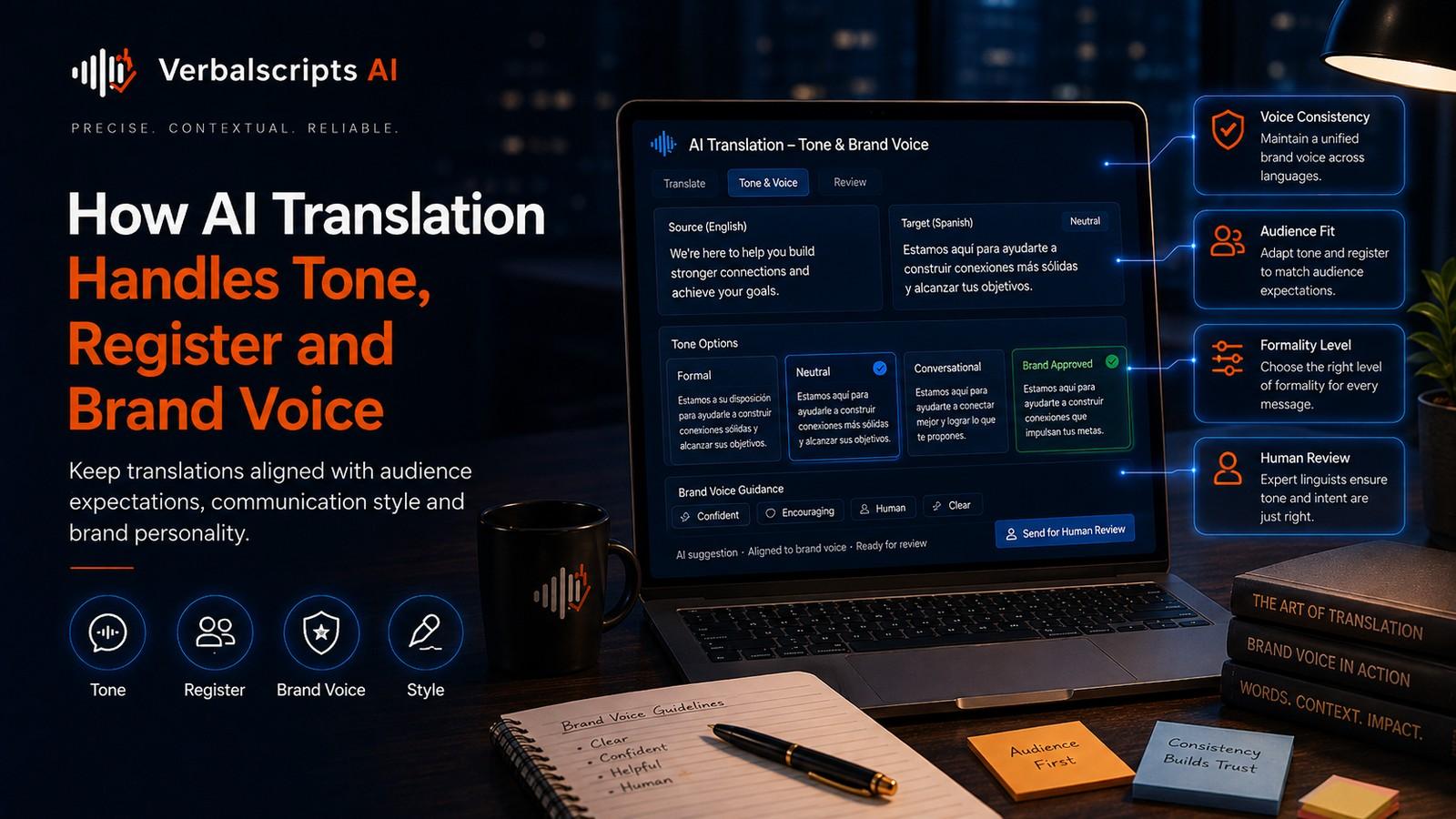
Brand voice must be explicit
AI can imitate tone, but only if the brand voice is defined.
A strong brief should state whether the brand is:
- authoritative;
- warm;
- premium;
- playful;
- technical;
- minimalist;
- bold.
It should also include:
- words to prefer;
- phrases to avoid;
- punctuation style;
- formality level;
- sentence length preference;
- examples of “sounds like us” and “does not sound like us.”
Without this, “translate the copy” often produces generic marketing language.
Audience and funnel stage matter
A homepage headline and a detailed solution page are not the same task.
Marketing translation should account for:
- who the audience is;
- what the offer is;
- whether the page is awareness, consideration or conversion focused;
- what action the user should take.
A CTA for enterprise buyers may need authority and clarity. A social caption may need brevity and energy.
The best translation is shaped by the intended outcome.
Headlines and taglines
These are high-risk because they are short and carry a large share of brand meaning.
A literal translation may:
- sound awkward;
- lose rhythm;
- become too long;
- lose the implied promise;
- create unintended connotations.
It is often better to allow multiple alternatives and select the strongest option in review.
AI can generate several candidate headlines quickly, making it useful for creative exploration.
Calls to action
CTA language varies across markets.
“Get started,” “Book a demo,” “Try free,” and “Contact sales” should not be translated mechanically if the target market uses different phrasing norms.
The translated CTA should preserve:
- action;
- urgency level;
- commercial intent;
- tone.
Short UI and marketing strings benefit from screenshot or page-level context.
Product names and brand terms
Do not let AI invent alternate names for branded concepts.
Protect:
- company name;
- product names;
- feature names where policy requires;
- trademarked slogans if fixed;
- approved campaign terms.
A glossary is valuable here not because it makes copy more literal, but because it protects brand coherence.
Cultural adaptation
Localization can matter as much as wording.
Marketing copy may need adaptation for:
- idioms;
- humor;
- references;
- examples;
- value framing;
- currency and offers;
- proof points;
- compliance language.
A message built around one cultural reference may not travel well. AI can suggest alternatives, but human market familiarity improves judgment.
SEO and discoverability
Translated marketing pages should also serve target-language search behavior.
Google Search Central’s current AI-features guidance states that the same foundational SEO practices apply for AI search experiences. That means good multilingual marketing content should still focus on helpfulness, clarity and discoverable page structure.
Do not simply translate the source keyword list. Local users may search differently. For strong multilingual SEO:
- localize page titles;
- localize meta descriptions;
- research target-language keywords;
- maintain useful headings;
- connect language variants correctly.
Landing pages and conversion copy
Landing page translation requires extra discipline because multiple elements interact:
- headline;
- subheadline;
- trust copy;
- feature bullets;
- CTA;
- form labels;
- testimonial excerpts.
A weak translation in one element can reduce conversion even if the rest is strong. This is why post-translation review should examine the page as a whole, not only line-by-line segments.
Social media and ads
Short-form marketing copy is especially hard.
Ad copy and social posts often depend on:
- brevity;
- wordplay;
- platform norms;
- audience rhythm.
AI can help generate localized variants quickly, but human curation remains valuable because small changes in emphasis or phrasing can alter performance significantly.
Email campaigns
Marketing emails combine persuasion with deliverability, subject-line constraints and CTA clarity.
Translate:
- subject lines;
- preheaders;
- body copy;
- buttons;
- legal footer text.
Review:
- length constraints;
- promotional tone;
- clarity of offer;
- local compliance considerations.
A translated subject line that is technically faithful but unappealing may reduce opens.
Testimonials and case studies
These should preserve factual meaning and voice without over-polishing.
Review:
- company names;
- job titles;
- numbers;
- quoted claims;
- legal approvals for use.
Sometimes the original quote should remain partially adapted rather than rewritten into overly smooth copy that no longer sounds authentic.
Human review models
Brand-linguist review
Useful for most marketing content.
In-market reviewer
Helpful for culturally sensitive campaigns and regional nuance.
Creative director or brand review
Important for flagship pages, launches and high-visibility campaigns.
Not every asset needs full transcreation, but the review depth should match the visibility and strategic importance of the content.
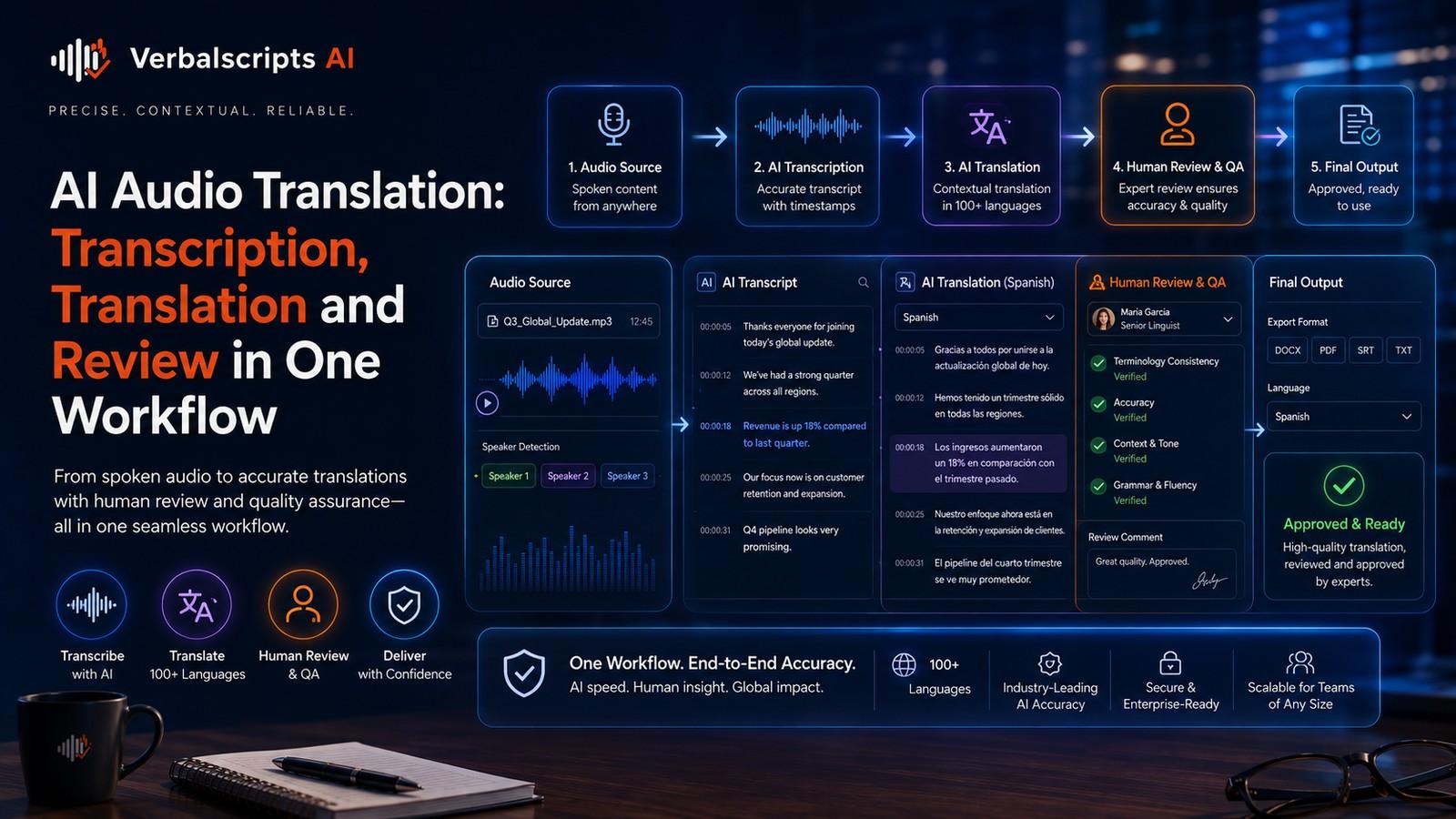
A practical workflow
Step 1: define the asset and objective
What is being translated, and what should it do?
Step 2: supply brand guidance
Voice, tone, glossary, examples and forbidden phrases.
Step 3: define the market
Language, locale, audience and cultural context.
Step 4: AI translation or candidate generation
Allow multiple options for short creative copy.
Step 5: human review
Evaluate not just accuracy but persuasion and brand fit.
Step 6: page-level QA
Review the full page, email or ad in context.
Step 7: performance feedback
Feed winning localized language back into the system.
Common failure patterns
Literal but lifeless copy
The message preserves meaning but loses energy or elegance.
Brand drift
The translation sounds unlike the company.
Wrong register
The tone is too formal, too casual or too generic for the audience.
Mislocalized CTA
The call to action sounds unnatural in the target market.
Overcreative translation
The target copy becomes catchy but departs from the source offer or claim.
Missed SEO opportunity
A translated page uses source-language phrasing instead of local search behavior.
What AI does well
AI can be excellent for:
- fast first drafts;
- multi-variant headline generation;
- adapting long-form copy efficiently;
- maintaining baseline consistency;
- scaling content across many markets.
These strengths free human reviewers to focus on the most creative and strategic choices.
Where humans matter most
Humans matter most for:
- taglines;
- campaign headlines;
- brand nuance;
- cultural resonance;
- conversion-sensitive assets;
- final quality judgments.
That is the difference between translation that reads correctly and copy that actually performs.
Performance feedback strengthens localization quality
Marketing localization should learn from results. If one translated CTA consistently performs better, or one subject line style increases opens, those patterns should feed back into the brand guidance used for future AI-assisted translation. This does not mean chasing every short-term metric. It means building a system where linguistic quality and market performance inform one another. Over time, the organization develops a more mature localized brand voice rather than treating each campaign as a standalone translation event.
Content types that benefit most from human creative review
Not every asset needs a deep transcreation pass. But homepage hero copy, paid campaign headlines, launch messaging, video scripts and partnership announcements often benefit from human creative review because they shape first impressions. AI can provide options and speed; human reviewers decide which option truly sounds compelling in-market. That division of labor tends to produce better outcomes than forcing either humans or AI to carry the whole process alone.
Product, region and channel differences
Marketing translation should also recognize that the same brand can sound different by region, product line and channel. A fintech landing page, a healthcare brochure and a lifestyle social post may all belong to one company, yet require different tone ranges. AI can adapt successfully when those distinctions are part of the brief. Without them, the output tends toward generic “global English translated into something else.”
Compliance and claims review
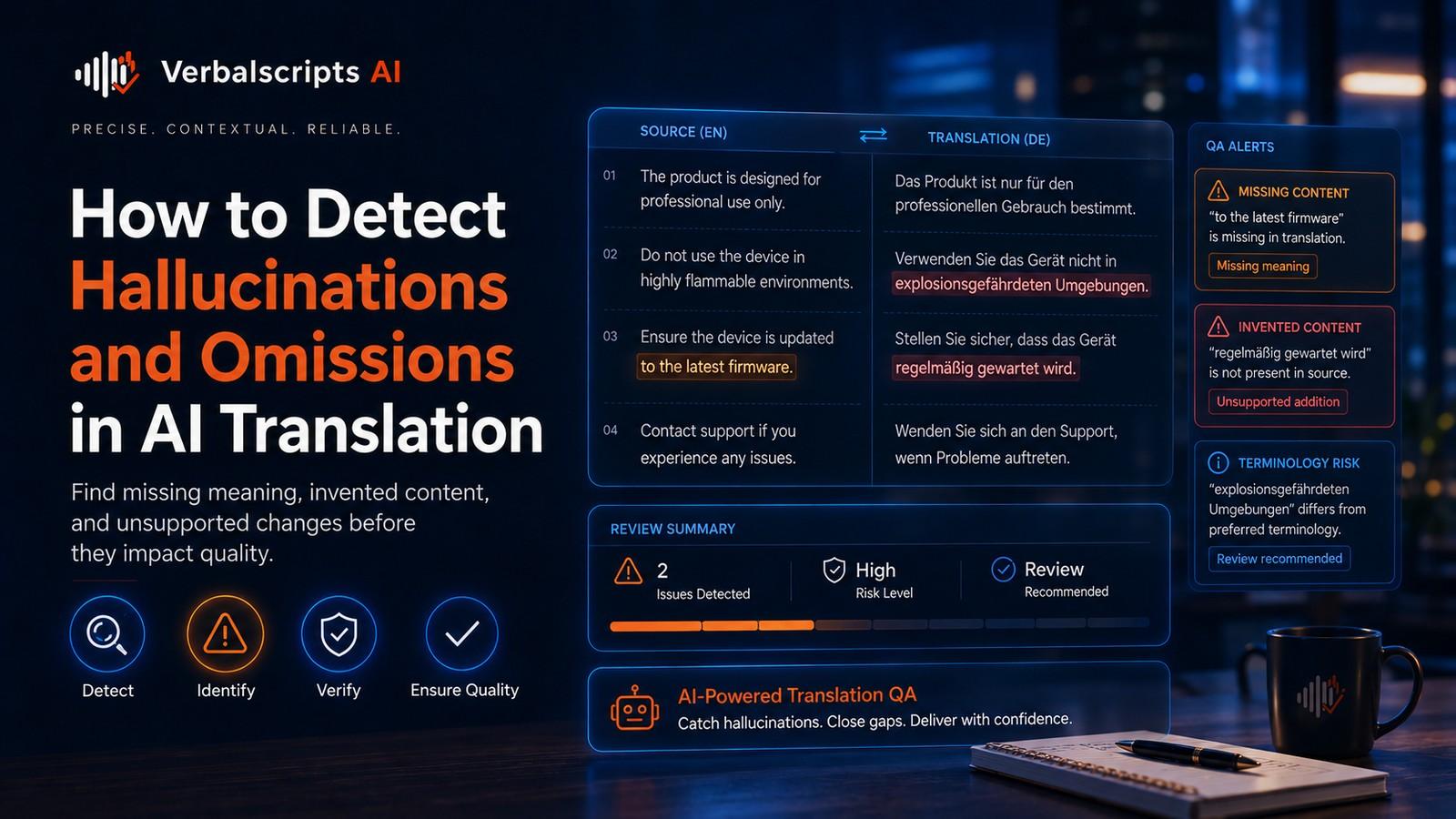
Marketing content sometimes includes claims about performance, pricing, outcomes or competitive differentiation. When those claims are translated, accuracy matters not just for brand quality but also for legal and regulatory exposure. Review should verify that the translated copy does not exaggerate, omit qualifiers or imply promises the source did not make.
Content operations and campaign velocity
Marketing teams often work under launch pressure. AI translation can shorten time to market by generating multilingual drafts quickly across landing pages, emails, ad variants and product announcements. The real advantage appears when the organization combines that speed with a reusable brand system (approved terminology, voice rules and in-market examples) so that faster output does not lead to brand inconsistency.
Maintaining authenticity across languages
Global brands often struggle with sounding either too generic or too foreign in translation. Good marketing localization avoids both extremes. It keeps the core identity recognizable while making the target copy feel native enough to persuade real readers. That balance is exactly why human review remains valuable for high-visibility campaigns.
Frequently asked questions
Can AI preserve brand voice in translation?
Often yes, if given strong guidance. The more clearly the brand voice is defined, the better AI can follow it.
What marketing content needs transcreation?
Usually slogans, ad copy, hero copy and other highly condensed or emotional messaging.
Is marketing translation different from ordinary translation?
Yes. It is judged not just by accuracy but by persuasion, tone and brand fit.
Should marketing pages be optimized for local search too?
Yes. Multilingual marketing content should use target-language search behavior, localized titles and helpful page structure.
When is human review essential?
For flagship campaign assets, high-visibility brand pages and content where tone or conversion impact is critical.
Conclusion
AI marketing translation is most powerful when treated as a brand-enabled localization workflow, not as a literal language swap.
Define the audience, explain the voice, protect the brand terms and review the message in context. AI can move fast and generate strong drafts, but the final standard remains human: does this sound like us, and will it work in this market?
Research references
- Google Search Central, AI features and your website:
- Google Search Central, International and multilingual site topics:
- Microsoft Learn, Localization overview:
- Google Cloud, Creating and using glossaries: