Teams often discover that neural machine translation versus LLM translation quality is multidimensional. Faithfulness, terminology, locale conventions, formatting, tone, names, numbers and long-document consistency can all matter. This guide focuses on production decisions rather than assuming that fluent machine output is automatically publication-ready.
For the product workflow, see AI Translation. This guide focuses on the practical quality, workflow and buyer questions around the topic rather than product mechanics.
Key takeaways
Key takeaways
- Treat neural machine translation versus LLM translation as an end-to-end workflow, not just a model output.
- Evaluate quality on representative material and include source-text quality, language-pair coverage and domain terminology in the test plan.
- Use human review where the cost of a wrong word, speaker, number, name or translation is materially higher than the cost of checking it.
- Keep source, instructions, output and revisions traceable so teams can reproduce and audit important corrections.
- Judge the final deliverable by its downstream task: publication, localization, product use, search or customer communication.
1. Understanding neural machine translation versus LLM translation
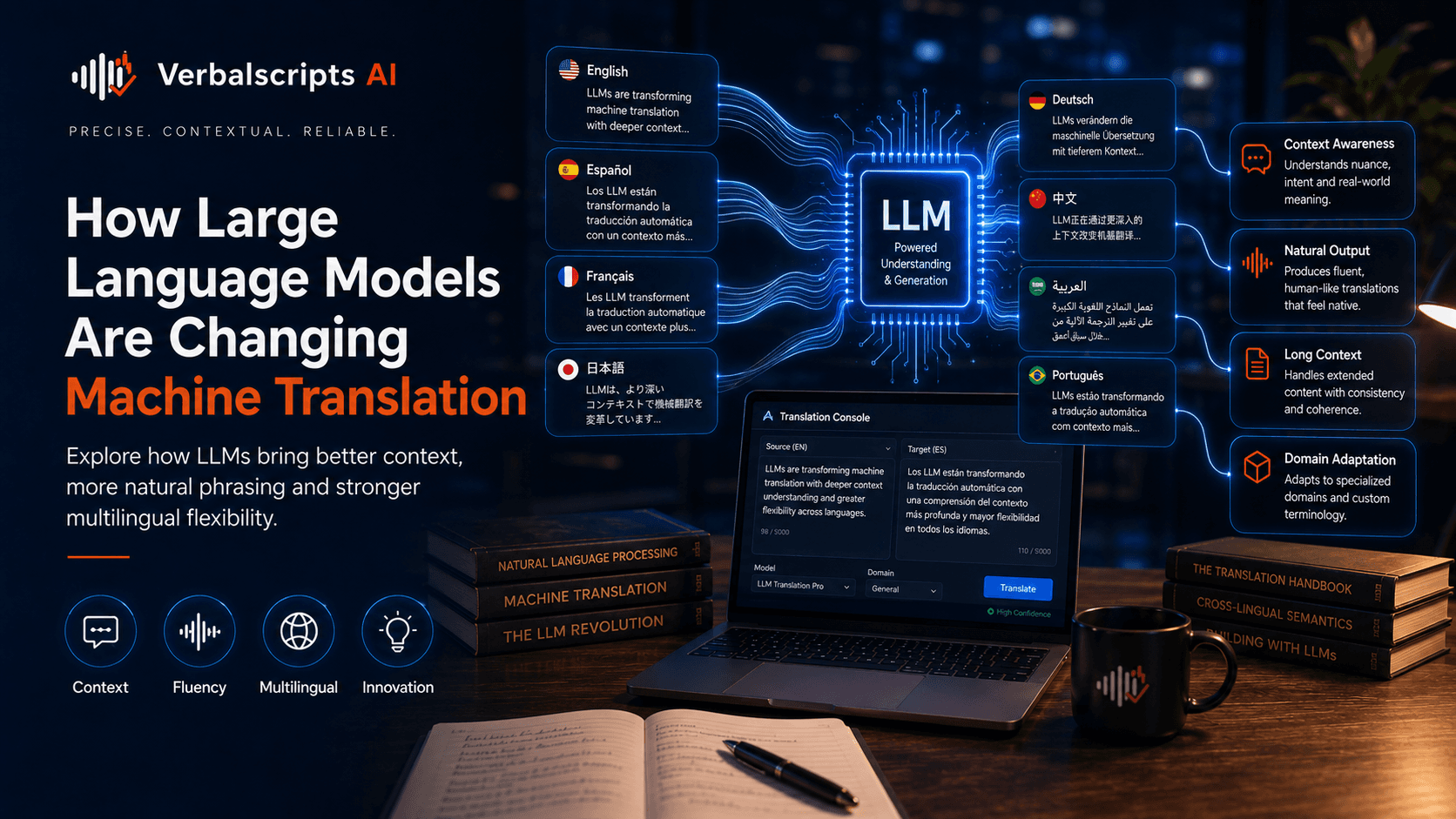
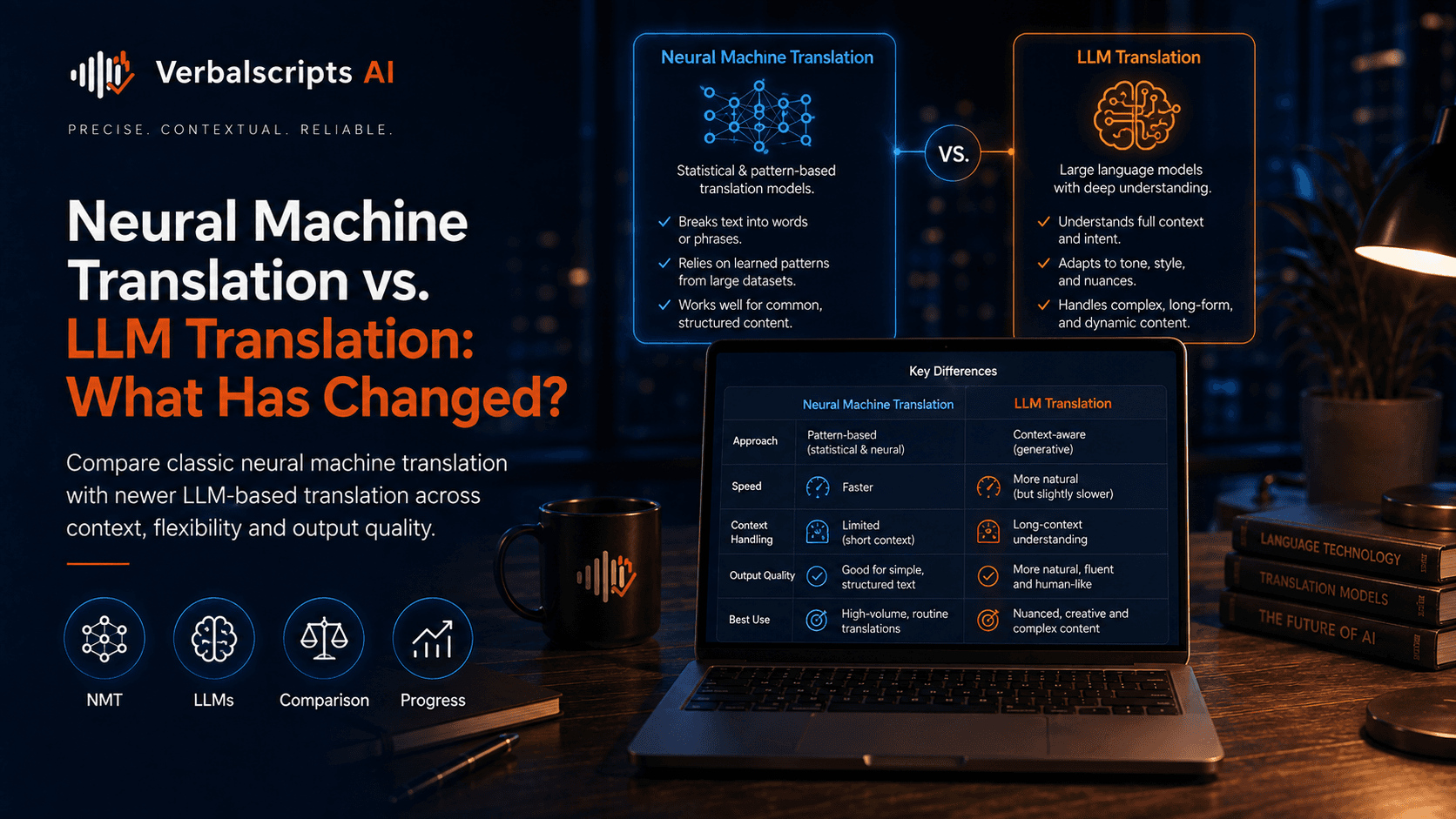
Neural machine translation (NMT) popularized end-to-end sequence models trained specifically for translation. Large language models add broader generative capabilities, instruction following and potentially more document context, but they also introduce a different risk profile because fluent generation can paraphrase, omit or add material.
Specialized NMT systems often emphasize deterministic translation behavior and efficiency, while LLM-based workflows can be more flexible about tone, formatting and context. The tradeoff should be tested on the real language pair and content rather than assumed from model size or general fluency.
For procurement and evaluation, compare faithfulness, terminology, consistency, latency, cost, privacy, controllability and failure behavior. The winning approach may differ between high-volume repetitive content and complex documents that need broader context.
2. What determines quality
Source-Text Quality. Translation cannot fully resolve unclear, contradictory or poorly structured source content. Clean source text reduces ambiguity before the model makes language choices.
Language-Pair Coverage. Performance can vary substantially across source-target pairs and locales. Test the exact pair and domain rather than inferring from another language.
Domain Terminology. Legal, medical, technical and brand terms need controlled equivalents. Glossaries and human review help prevent inconsistent or misleading translation.
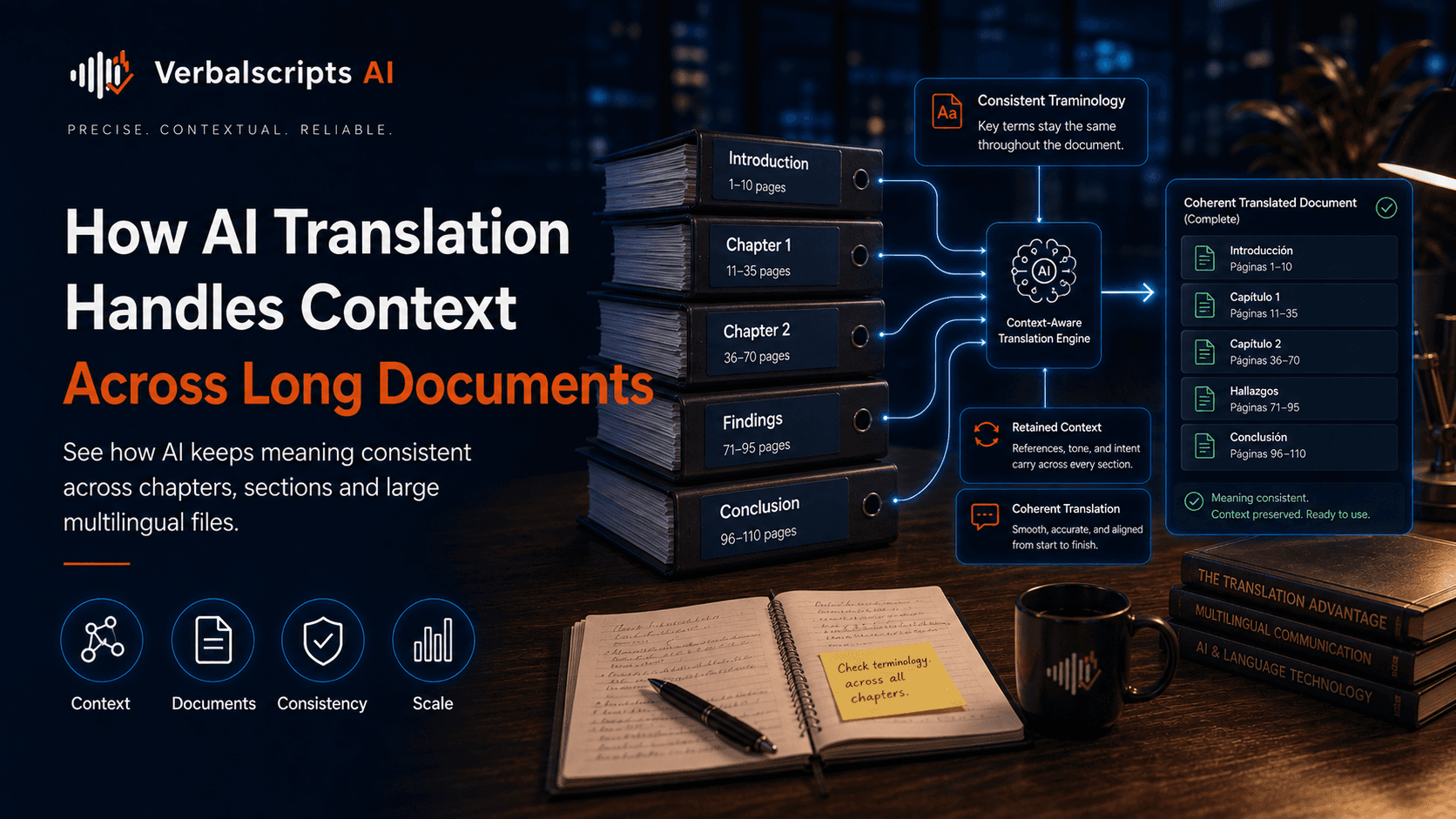
Document-Level Context. Pronouns, terminology, tone and references may depend on earlier sections. Long-document workflows should preserve context and consistency across chunks.
Human Revision For High-Impact Use Cases. Where mistranslation can affect rights, safety, money or public communication, qualified human revision should be built into the release process.
Context Window And Document Structure. LLM translation can use broader context, but long files may still be chunked or exceed practical context limits. Preserve headings and neighboring context when splitting.
These factors interact. A glossary can improve terminology consistency but cannot resolve a genuinely ambiguous source sentence; a large context window can help with references but does not guarantee that names, numbers or negation are preserved. The safest way to understand performance is to test the complete workflow on representative source material.
3. A practical decision framework
The point of the framework is not to force every project into the same quality tier. It is to make tradeoffs explicit. A searchable internal archive, for example, may value throughput and broad recall; a legal or medical deliverable may prioritize exact names, numbers, attribution and review even if that adds time.
4. Recommended workflow
1. Define the translation purpose. Specify audience, target language/locale, required tone, terminology, file format and whether the translation is informational, customer-facing, regulated or publication-ready.
2. Prepare source content and terminology. Use the cleanest source version available. Collect approved names, product terms, abbreviations, translation memories or glossaries that should remain consistent.
3. Generate the AI translation. Process content with settings appropriate to the language pair and document type. Preserve structure such as headings, tables, lists, timestamps or speaker labels where required.
4. Review meaning, terminology and omissions. Check not only fluency but faithfulness. Verify names, numbers, negation, modality, dates, units and domain terms; inspect long-document consistency and ambiguous passages.
5. Finalize and validate the deliverable. Confirm formatting, links, tags and target-locale conventions. For high-impact content, use qualified human review before the translation is released or used to make decisions.
5. Common failure modes to avoid
- Translating ambiguous source text without context. Build a specific control for this failure mode rather than relying on a general accuracy promise.
- Using one quality expectation across all language pairs. Build a specific control for this failure mode rather than relying on a general accuracy promise.
- Breaking terminology consistency across long documents. Build a specific control for this failure mode rather than relying on a general accuracy promise.
- Ignoring numbers, names and formatting. Build a specific control for this failure mode rather than relying on a general accuracy promise.
- Publishing high-stakes raw machine translation without review. Build a specific control for this failure mode rather than relying on a general accuracy promise.
- Assuming fluent output is faithful output. Build a specific control for this failure mode rather than relying on a general accuracy promise.
Failure analysis is especially valuable because average metrics can hide concentrated problems. A system may perform well overall but repeatedly fail on a particular accent, speaker role, language pair, product name or recording channel. Those recurring errors are often more actionable than a single global score.
6. How to evaluate a system or provider
Representative evidence. Use source files that reflect your normal work plus realistic edge cases. Ask for results on your material, not only benchmark claims.
Transparent quality definition. Define what counts as an error and what matters most: words, speakers, timestamps, names, numbers, formatting, meaning, omissions or downstream task success.
Review and correction process. Understand what is automatic, what receives human review, who performs that review, what reference materials are used, and how corrections are tracked.
Security and retention. Document how files are transferred, accessed, stored, retained and deleted. Sensitive workflows need controls proportional to the data and the consequences of exposure.
Operational fit. Check supported formats, turnaround, scale, API or batch behavior, revision handling, support, and whether the final output integrates cleanly with your tools.
For model and workflow evaluation, explore Verbalscripts AI Evaluation and use a pilot that mirrors your production mix.
7. Production implementation notes for neural machine translation versus LLM translation
- Preserve source structure. Keep headings, lists, tables, captions, segment IDs and document order intact so target text can be compared back to the source.
- Control terminology explicitly. Maintain approved translations for product names, legal terms, technical vocabulary and recurring phrases rather than allowing each chunk to choose independently.
- Review for omissions and additions, not only grammar. Fluent target-language prose can conceal a missing qualifier, changed negation or extra explanation that was never in the source.
- Localize intentionally. Date formats, units, punctuation, forms of address and locale conventions should follow the target audience without changing the underlying facts.
- Run a document-level final pass. Check repeated entities, headings, cross-references, numbers and tone across the entire file after all segments have been assembled.
8. Illustrative workflow example
Imagine a team translating a long customer-facing document into several target languages. Instead of sending isolated sentences to a model, the team preserves headings and IDs, supplies approved terminology, translates in context-aware chunks, flags low-confidence or high-risk sections for review, and then performs a cross-document consistency pass for names, numbers and recurring terms. The example is illustrative, not a client case study, but it shows why translation quality is a workflow property rather than a one-shot model property.
If the same content originated as audio or video, transcription becomes an upstream dependency. Speaker labels and timestamps should remain associated with the translated segments so subtitles, review and source verification do not lose their connection to the original media.
9. Related Verbalscripts AI resources
- AI Translation: use this page when the reader is ready to move from education to the relevant product, workflow or buying decision.
- Pricing: use this page when the reader is ready to move from education to the relevant product, workflow or buying decision.
- Resources: use this page when the reader is ready to move from education to the relevant product, workflow or buying decision.
- How Large Language Models Are Changing Machine Translation: supporting cluster article.
- How AI Translation Handles Context Across Long Documents: supporting cluster article.
- AI Translation: The Complete Guide to Translating Text, Documents, Audio and Video: supporting cluster article.
Frequently asked questions
Is neural machine translation versus LLM translation accurate enough to publish without review?
Sometimes for low-risk content, but fluency is not the same as faithfulness. Public, regulated, contractual, technical or brand-sensitive content should be checked for meaning, omissions, names, numbers and terminology before publication.
How should AI translation quality be evaluated?
Use representative source material, define target-language expectations, compare meaning rather than surface fluency alone, and review terminology, omissions, additions, numbers, named entities, tone and document-level consistency.
Does AI translation work equally well for every language pair?
No. Quality can vary with language pair, available training data, domain, source complexity and model design. Test the exact languages, locales and content types you plan to use.
When is human review most important?
Human review becomes more important when a mistranslation can affect legal rights, health, safety, financial decisions, customer trust, brand voice or regulated communication.
Can the same workflow translate documents, audio and video?
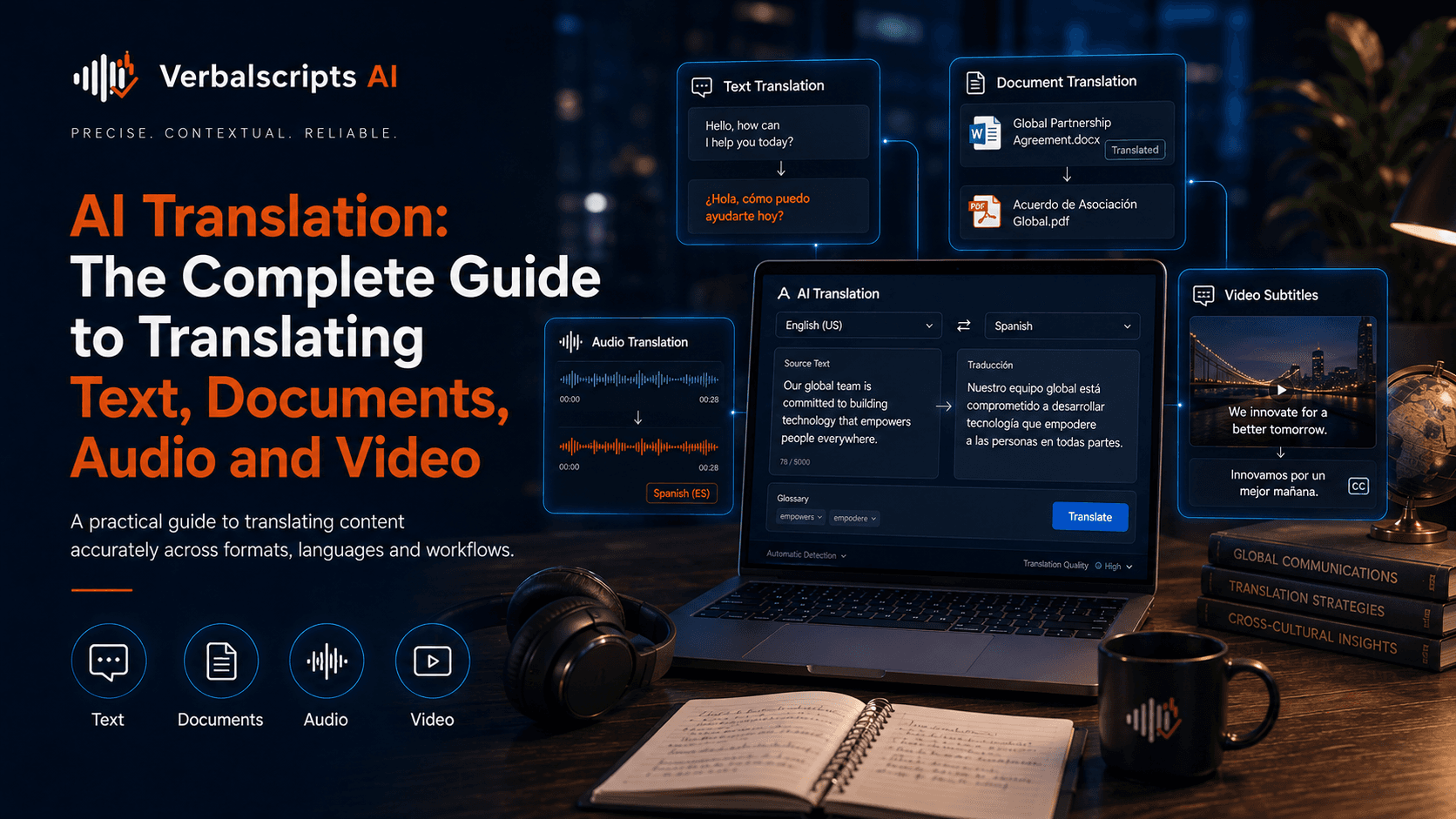
The overall workflow can be unified, but audio and video usually require transcription before translation and may also require speaker labels, timestamps, captions or subtitle timing in the final deliverable.
Final takeaway
Neural Machine Translation vs. LLM Translation: What Has Changed is ultimately a workflow design question. Strong implementations define the target audience and language, preserve source context, control terminology, test representative documents, measure faithfulness as well as fluency, and add human review where the consequences justify it. That is more reliable than choosing a system from fluent sample output alone.
Next step: Explore AI Translation with Verbalscripts AI or review pricing if you are comparing implementation options.
Authoritative external references
Use external links to support definitions, standards, security guidance and accessibility or platform-specific facts. Avoid over-linking to competitor marketing pages when a standards body, regulator or primary documentation source is available.
- eTranslation: European Commission; useful for neural machine translation, security and human revision of raw machine translation.
- Use of machine translation on Europa: European Commission; useful for machine-translation quality limitations and language-pair variability.
- Neural Machine Translation: ACL Anthology; useful for foundations and practical concepts in neural machine translation.
- NIST AI Risk Management Framework: National Institute of Standards and Technology; useful for trustworthiness, measurement, governance and AI risk management.
| Speed | AI translation is fast and scalable | Human translation is slower but brings expert judgment |
|---|---|---|
| Consistency | Strong when terminology is controlled | Strong with professional style guides and translation memory |
| Ambiguity | May choose a plausible but wrong interpretation | Translator can research and ask for context |
| Risk | Best for lower-risk or reviewed workflows | Preferred when legal, brand or safety consequences are high |
| Best workflow | AI first pass + targeted review | Human-led translation or full post-editing when stakes justify it |